

MIT & Mecalux unveil AI tool to optimise warehouses
Tue, 10th Mar 2026.webp)
MIT's Centre for Transportation & Logistics and warehouse technology supplier Mecalux have developed an artificial intelligence-based simulator to optimise how companies distribute inventory across multiple warehouses in a single logistics network.
Called Genetic Evaluation & Simulation for Inventory Strategy (GENESIS), the platform uses a genetic algorithm and machine-learning models to evaluate large numbers of inventory and transport options. It recommends stock levels by warehouse and sets replenishment timing.
Multi-warehouse inventory planning has grown more complex as companies expand fulfilment footprints and face demand volatility across regions. Many operations must balance local service levels against the cost of holding stock, moving products between sites, and paying for outbound transport. Changes in one part of the network can shift costs elsewhere, especially when warehouse capacity and transport constraints limit choices.
GENESIS is designed for this kind of network-wide decision-making. It takes inputs such as forecast demand by region, transport costs, and each warehouse's operating capacity. It then tests replenishment policies in a simulated environment rather than in live operations.
Scenario testing
Users can run multiple tactical scenarios and compare trade-offs between strategies. The system is intended to identify options that reduce overall logistics costs while limiting the risk of stockouts.
"The genetic algorithm enables multiple simulations to be run using different parameters until the most efficient logistics strategy is identified. Companies can compare scenarios and select the one that best fits their operations," said Dr. Matthias Winkenbach, Director of Research at MIT's Centre for Transportation & Logistics and the Intelligent Logistics Systems Lab.
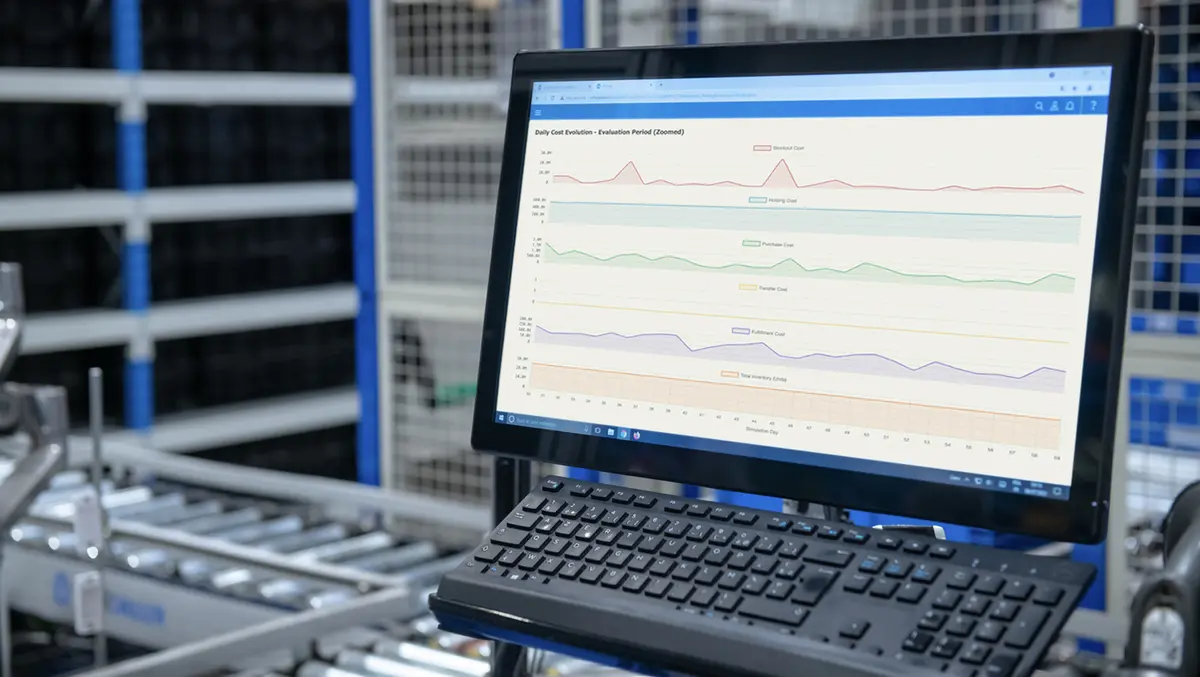
After users enter data and parameters, GENESIS generates a recommended solution and statistical dashboards. The dashboards surface consumption patterns, highlight regions with high demand variability, flag stock keeping units with higher stockout risk, and identify warehouses that may face supply issues.
The simulator is intended for both technical teams and business decision-makers. Its design aims to reduce reliance on specialist analytical staff for scenario analysis while keeping sufficient detail for teams that want to review assumptions and outputs.
Stock rebalancing
A core feature is inventory rebalancing across sites. GENESIS evaluates whether a network can meet demand more efficiently by transferring products from a warehouse with excess stock rather than placing new purchase orders with suppliers.
This reflects a common challenge in distributed networks: surplus in one location and shortages in another. Rebalancing can cut write-offs and reduce overall inventory, but it adds internal transport movements and handling. GENESIS treats internal transfers as part of the broader cost-and-service equation.
The platform also recommends transport strategies. It can assess whether consolidating shipments improves truck utilisation and suggest which warehouse should fulfil specific orders based on time and cost inputs.
"The real challenge wasn't finding the right algorithm - it was making it fast enough to be practical. We developed GENESIS from the ground up to evaluate thousands of scenarios simultaneously rather than sequentially. What used to take days now takes minutes, which means companies can use it for real tactical planning, not just theoretical analysis," said Rodrigo Hermosilla, Research Engineer at the MIT Intelligent Logistics Systems Lab.
Speed matters because tactical decisions often shift with demand, supplier performance, and transport rates. Network planners may need to re-run scenarios when forecasts change, site capacity shifts, or a lane becomes constrained. A simulator that can run more frequently can support routine decision cycles rather than remain a periodic modelling exercise.
Broader collaboration
GENESIS is one of the first outcomes of a joint initiative between Mecalux and MIT CTL. The collaboration is expected to move into a new phase focused on applying AI to other areas of warehouse and logistics operations.
Planned work includes internal replenishment, digital twins in high-density automated storage systems, and slotting optimisation. These areas influence how stock flows within a warehouse, how automation systems are tuned, and how items are positioned to balance labour and travel time with service needs.
"The goal is to help companies minimise the total cost of their logistics network while ensuring the highest service level," said Javier Carrillo, CEO of Mecalux.