

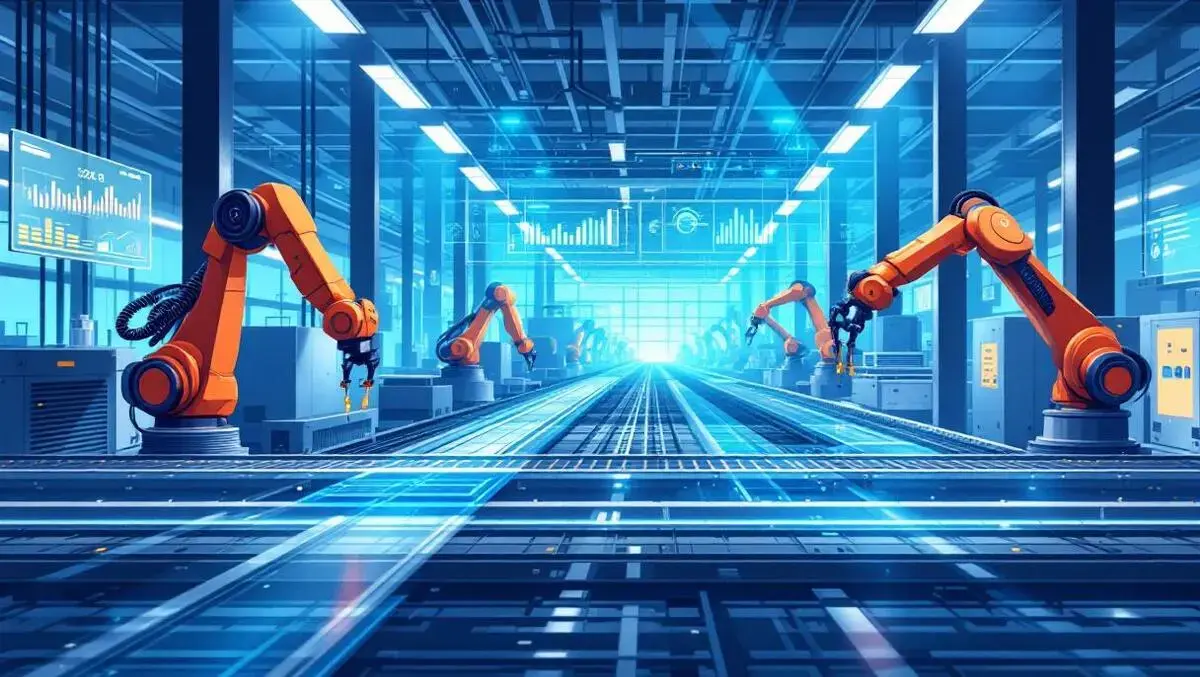
FPT, Intel partner on AI-driven factory optimisation
Wed, 29th Apr 2026
FPT and Intel have formed a strategic relationship to deliver an AI-driven factory optimisation system focused on manufacturing operations.
The joint offering combines Intel's factory simulation and AI optimisation tools with FPT's digital manufacturing software and integration capabilities. It is designed to improve production throughput, reduce bottlenecks and support more autonomous factory operations.
System design
As production networks grow more complex and disruptions become harder to predict, manufacturers are looking for better ways to use real-time operational data. FPT and Intel said their approach is intended to create a closed-loop system in which simulation, live factory data and AI work together to adjust performance.
Under the arrangement, Intel is contributing its Automated Factory Solutions portfolio, including Factory Pathfinder and Factory Recon. These tools model factory operations, simulate production scenarios and give managers a broader view of activity across a site.
FPT is adding manufacturing software across operations management, quality management and data integration. Its FleziOps, FleziQMS and FleziUDP platforms connect information from manufacturing execution systems, enterprise resource planning software and shop-floor systems into a single operational data layer.
The combined stack is intended to let manufacturers run large volumes of simulations, identify bottlenecks before they affect output, adjust scheduling and material flow, and monitor operations through digital twin models. The focus is on live production environments, where changes can be tested virtually before being applied on the factory floor.
Factory focus
The announcement reflects a broader push by industrial technology suppliers to bring AI into manufacturing in more practical ways, particularly in planning, scheduling and downtime recovery. Digital twins and simulation tools have been used in industry for years, but suppliers are increasingly linking them to real-time data pipelines and AI models to support faster decisions inside plants.
For Intel, the relationship extends the reach of its manufacturing software beyond its own technology base and into a broader systems integration framework. For FPT, it adds another global technology partner to its manufacturing business, where it has been building projects around smart factory systems and supply chain resilience.
FPT said it has delivered digital transformation work for more than 150 manufacturing companies. It also said it has more than 25,000 globally certified engineers and operates across more than 30 countries and territories.
In 2025, FPT reported revenue of USD $2.66 billion and a workforce of more than 54,000 employees across its main businesses. Headquartered in Vietnam, the company has expanded internationally through its IT services and software operations.
Industry demand
Intel described manufacturing as an environment that requires connected systems rather than standalone tools.
"Manufacturing is one of the most complex environments in the world, and optimising it requires more than isolated tools; it requires a connected, intelligent system. By collaborating with FPT, we're able to extend the reach of Intel's factory optimisation technologies and help manufacturers operationalise AI-driven insights at scale," said Paul Schneider, Principal Engineer and Director, Intel.
FPT said customer demand is shifting towards factory systems that can react more quickly to changing conditions on the production line.
"Manufacturing has reached a turning point where AI is not just augmenting operations but actively orchestrating them. At FPT, we see a growing demand for smarter, more adaptive manufacturing systems that can respond to real-time conditions," said Hoan Nguyen, SEVP, FPT Software and CEO, FPT Americas.
"By combining Intel's expertise with our AI-first solutions and global delivery capability, we are helping manufacturers achieve new levels of operational agility and efficiency," added Nguyen.