

Australian AI firms test Singapore market opportunities
Thu, 29th Oct 2026 (Today)
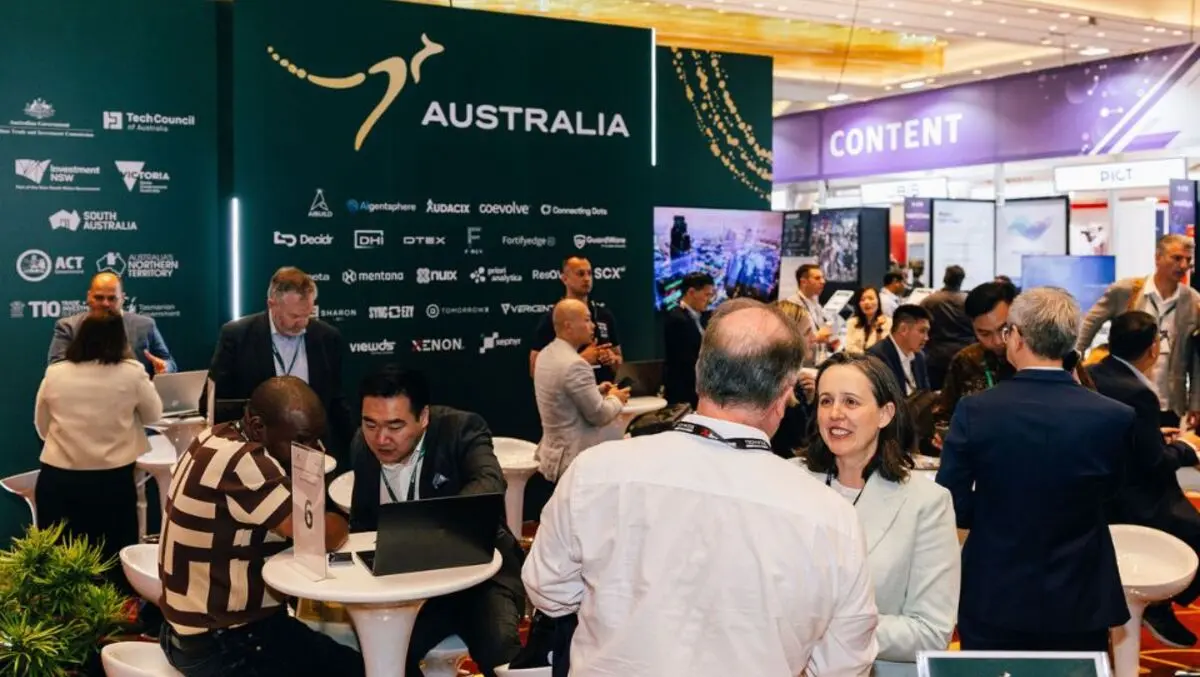
Austrade and the Tech Council of Australia took 24 Australian AI companies to Singapore to test commercial opportunities. The delegation held more than 100 engagements with prospective customers, partners and industry stakeholders.
The mission brought together companies working across digital infrastructure, enterprise AI, governance, cyber security and sector-specific applications to gauge demand in a market moving from AI experimentation to wider deployment.
More than 60 of the engagements were scheduled business-matching meetings. Further discussions took place through an AI forum, a Team Australia pavilion and activities around Singapore Tech Week.
Singapore has become an important entry point for Australian technology companies expanding across Southeast Asia. The trip was backed by the Australian Government's Accessing New Markets Initiative and formed part of a broader trade diversification effort led by Austrade and industry groups.
Market signals
Three themes emerged from the meetings and events. Buyers are looking for measurable business value rather than AI experimentation. Trust, governance and security remain central to adoption decisions. Demand is also rising for enabling infrastructure such as compute capacity and sovereign cloud services.
These signals suggest companies entering the market need to present products tied to specific business problems rather than broad claims about AI. They also point to stronger interest in tools that can meet compliance requirements, operate securely within existing systems and support operational efficiency.
The AI Transformation Forum, held during the visit, focused on what organisations need to move AI from early trials into day-to-day operations. Speakers from government and industry said large-scale deployment depends on clear business priorities, leadership commitment, workforce capability, and trusted data and governance foundations.
The event featured contributions from AI Singapore, OpenAI, Google Cloud, Mastercard and SJ Group, alongside Australian businesses. Australia's Deputy High Commissioner to Singapore, Emily Follett, opened the forum. Contributors also included Dr Kate Cornick, Chief Executive Officer of the Tech Council of Australia, and Radi Kovacevic, Chief Information and Digital Officer at Austrade.
"For some companies, this is their first entry into the Asian market," said Dr Kate Cornick, Chief Executive Officer of the Tech Council of Australia.
"Others are looking to grow their existing footprint. Regardless of where they are on that journey, Singapore offers enormous opportunities for Australian tech companies as a landing pad into Asia."
Broad mix
The Australian delegation reflected the range of businesses now trying to turn domestic AI work into export revenue. Participants included Sharon AI, SCX.ai and XENON Systems in AI infrastructure, compute and secure deployment, alongside Nuix, DTEX, Vericent, IDmeta and ViewDS in governance, compliance, risk management and digital trust.
Other delegates, including Mentana, Priori Analytica, FortifyEdge and ResQVision, focused on applications in supply chains, agribusiness, critical infrastructure, energy optimisation, public safety and industrial operations. The mix gave Singapore-based buyers and partners exposure to both the underlying systems needed to support AI and software aimed at solving operational problems.
One recurring issue was the growing emphasis on trust. As organisations examine how to use AI in regulated or business-critical settings, questions around data quality, accountability, explainability and secure deployment are becoming more important in purchasing decisions.
"The advantage of AI will come from the effectiveness of its deployment, not from access," said Tsubasa Bolt, Deputy Director, Sustainable Assets and Climate Solutions at SJ Group.
For Australian companies, this means technical novelty alone is unlikely to be enough. Businesses seeking contracts in Singapore and the wider region are being pushed to show how their products fit local requirements, align with governance expectations and deliver results in defined use cases.
Kenn Rodrigues, Co-founder and Chief Executive Officer of DHI, said the meetings in Singapore helped identify possible local partners. He pointed to the role of business-matching in narrowing down where commercial relationships may be most viable.
"Customers are looking for solutions built around a defined use case, supported by partners who understand the local market. The business-matching helped us identify several potential partners, and our next step is to continue those discussions and assess where there is the strongest fit," said Rodrigues.
Regional route
Austrade sees Singapore as a practical route into wider Southeast Asian markets because of its concentration of regional customers, investors and corporate decision-makers. Programs such as Landing Pads and sector-focused trade missions are intended to help companies turn early discussions into longer-term business development across the region.
Catherine Gallagher, Head of Austrade Southeast Asia, said the goal is to move beyond first meetings and create repeat commercial pathways for Australian exporters.
"Trade diversification is about helping Australian companies turn initial market engagement into long-term commercial pathways across Southeast Asia," said Gallagher.