

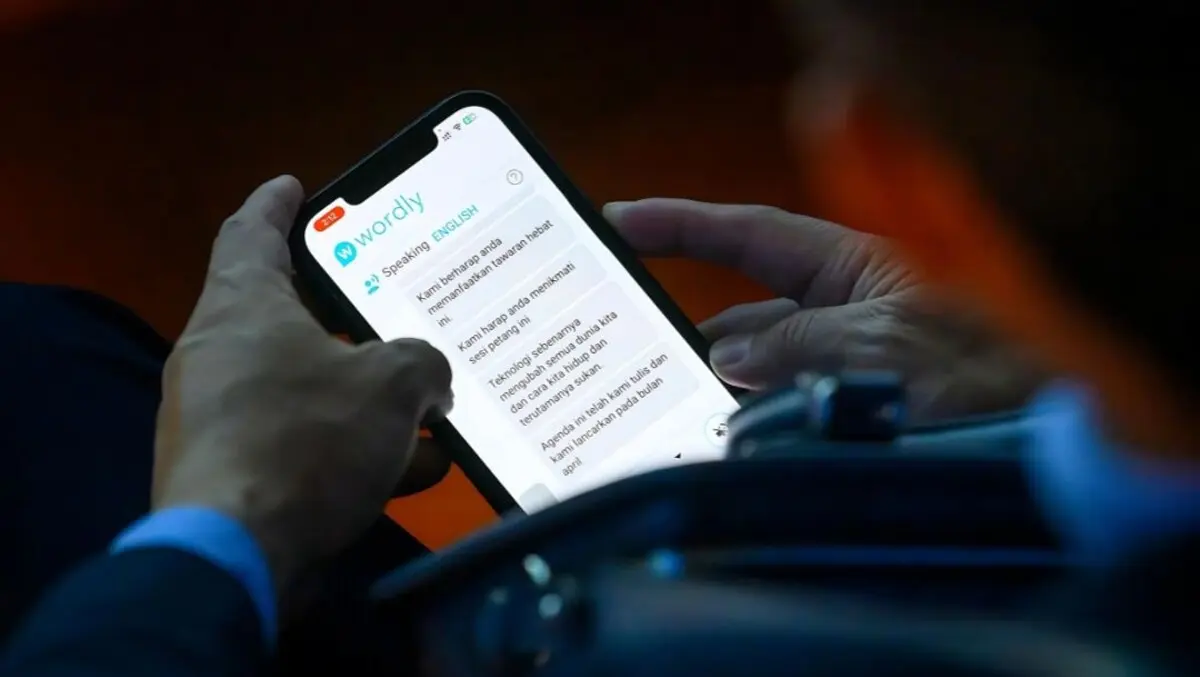
Wordly boosts mobile translation tools for live events
Fri, 27th Feb 2026
Wordly has rolled out mobile-first updates to its Translation App, adding new listening and speaking features for conferences, trade shows, and other live events where multiple languages are used.
The update targets how attendees use their phones during long, multi-session days. Background audio and screen-lock playback keep translated audio running while users switch apps or lock their screens. An instant language search feature is also intended to speed language selection at the start of a session.
The release also expands tools for speakers and session leaders. Push-to-talk is now built into the app for interactive sessions. Wordly has also added automatic language detection and switching for presenters who move between languages within the same session.
Wordly frames the changes as part of a broader shift in event planning, where language access is becoming a standard expectation for onsite and hybrid formats. "Event professionals are rethinking accessibility as a core part of the attendee experience," said Lakshman Rathnam, founder and CEO of Wordly.
"These mobile enhancements give organizers a scalable way to provide inclusive, multilingual access without additional hardware, staffing, or logistical burden," Rathnam said.
Attendee features
Background audio lets listeners keep the translated stream running while using other apps. Attendees often switch between an event app, email, and presentation materials during sessions, and the feature removes the need to keep the translation app in the foreground.
Screen-lock playback addresses a common issue at large events, where attendees can spend hours away from charging points. With this option, translated audio continues while the phone screen is locked. Wordly says it reduces battery drain during long conference days.
Instant language search is designed to speed up onboarding at the start of sessions. Instead of scrolling through a list, users can search and select from dozens of language options. The change may also reduce the need for on-site support, particularly at events with many first-time users.
Speaker tools
Push-to-talk brings two-way communication into the mobile app. It is aimed at smaller formats such as breakout discussions, workshops, hosted-buyer meetings, and small-group sessions, where participants often need to respond in real time rather than listen to a one-way translation feed.
Automatic language detection and switching is intended for sessions where presenters change languages midstream. The app recognises those changes and adjusts translation output without manual resets. The feature is intended for panel discussions and international sessions, where speakers switch languages for emphasis or when answering questions.
Operational model
Wordly's approach centres on attendees using their own iOS and Android devices rather than dedicated interpretation equipment. Participants access a session by entering a Session ID from the organiser and selecting a language. The app does not require users to create an account.
For speakers, access to advanced functions such as push-to-talk requires a passcode. Wordly describes this as a security measure that limits speaker controls to authorised participants.
The update reflects continued demand for multilingual options at events that mix in-person and remote participation. Hybrid formats have also raised expectations around accessibility, with organisers increasingly expected to provide live captions and language support alongside streaming and on-demand content.
Wordly's app sits within a broader market that includes interpretation services using headsets, booths, and onsite interpreters, as well as platforms offering automatic captions and translation. In this release, Wordly is emphasising mobile use patterns and the friction points that arise when translation depends on continuous phone use during long programmes.
Wordly says the mobile enhancements are available at no additional cost to existing customers. The company expects the features to be used across general sessions, breakouts, and ancillary meetings where multilingual participation is required.