

Ropedia launches academic programme for physical AI
Fri, 2nd Oct 2026
Ropedia has launched an Academic Partner Program for researchers and institutions, giving them access to the startup's HOMIE Gen2 platform.
The programme is aimed at academic work in robotics, embodied intelligence and physical AI, enabling researchers to capture and study real-world multimodal data.
Physical AI research depends on data drawn from how people move, interact with objects and navigate environments, rather than the largely digital data that has supported much of generative AI. The new programme is intended to widen access to that kind of data collection for universities and research groups.
Through the scheme, participating researchers receive access to HOMIE Gen2, a head-mounted multimodal capture platform. The device is designed to collect information from sensors and cameras, which researchers can then process through their own pipelines for work on world models, Vision-Language-Action models and related areas of study.
Research Access
HOMIE Gen2 captures synchronised multimodal information from real-world environments, including visual, motion, spatial, inertial and semantic data. Ropedia is positioning the device as a way for researchers to work with data gathered outside tightly controlled laboratory settings.
That approach reflects a wider effort in physical AI to build systems that can understand and act in the real world. Researchers in the field are seeking larger and more varied datasets that show human behaviour, object interaction and movement across everyday environments.
Nanyang Technological University, Singapore was one of the first institutions to trial HOMIE Gen2. Researchers from the university's College of Computing and Data Science have continued to use the device to acquire data and train embodied AI models.
Ropedia is an NTU spin-off, and key technology behind the platform was developed at the university. The tie-up gives the company an early academic reference point as it expands the programme to researchers outside Singapore.
Broader Network
Its academic collaboration network already includes institutions and research organisations in the US and Asia. Ropedia named Princeton University, Carnegie Mellon University, the University of California San Diego, the University of Illinois Urbana-Champaign, The Hong Kong Polytechnic University, Westlake University, Allen Institute for AI and Advanced Machine Intelligence, alongside NTU Singapore.
Beyond the hardware programme, Ropedia is developing a broader data infrastructure for physical AI, spanning real-world capture and data processing to model-ready datasets. Its Xperience-10M dataset has been downloaded more than 2.3 million times by academic institutions working on egocentric understanding and embodied AI.
Ropedia was founded in Singapore in the second half of 2025 by Zhaoxi Chen, Fangzhou Hong and Ziwei Liu. It also has an office in Mountain View, California, and serves more than 20 robotics and foundation model companies.
Singapore Focus
The launch comes as Singapore increases its focus on embodied AI through investment in research and development, infrastructure and testing, according to Ropedia. The company sees Asia as becoming an important centre for physical AI research and development.
Chen said Singapore's position in the research sector shaped the company's view of the opportunity.
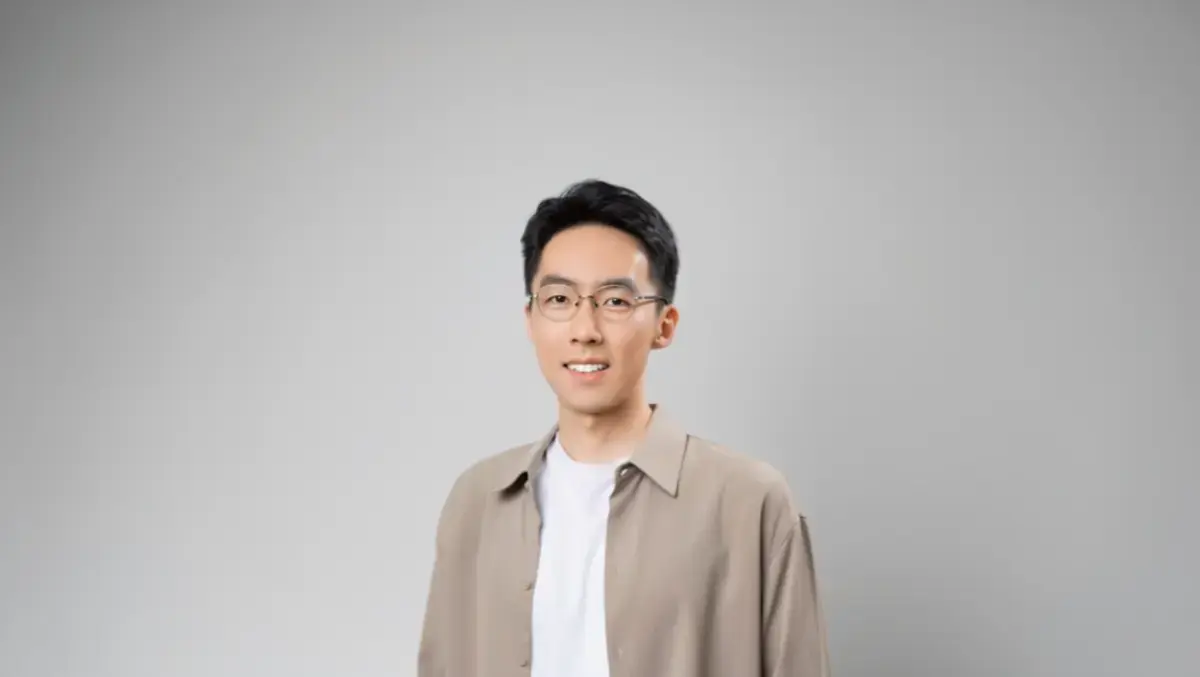
"Singapore has built a strong research and innovation ecosystem, and Physical AI presents an opportunity to connect that research strength with a rapidly developing global technology field," said Zhaoxi Chen, Co-Founder and Chief Executive Officer of Ropedia.
He said the programme aligns with the company's aim of widening access to real-world data tools.
"With the Academic Partner Program, we want to help researchers in Singapore and around the world access the real-world data infrastructure they need to explore what physical intelligence can become," said Chen.
Chen also linked the initiative to the company's decision to make Xperience-10M available on an open-source basis.
"We believe advancing the industry is a shared responsibility and not something any one company can do alone. Making Xperience-10M open source is part of that commitment, giving researchers and developers access to the data they need to push the boundaries of what is possible and helping the entire field move forward faster," he said.