

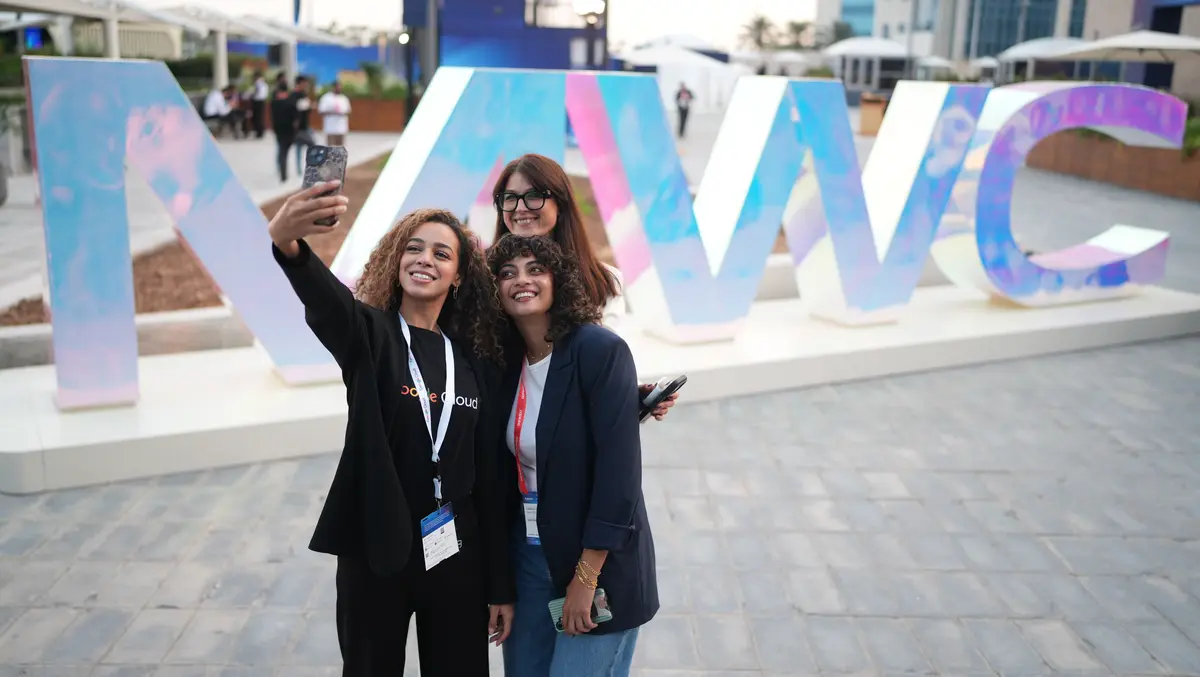
MWC Doha urges standards & action to close MENA gap
Mon, 9th Nov 2026 (Today)
MWC26 Doha opened in Qatar with a call for alignment on global industry standards and action to narrow the connectivity gap across the Middle East and North Africa. The event is being held alongside the ITU Plenipotentiary Conference in Doha.
At the Doha Exhibition and Convention Centre, the gathering brings together mobile operators, technology companies, policymakers and other industry figures as the region's mobile sector expands unevenly between advanced Gulf markets and countries where many people remain offline.
Figures released at the event show mobile technologies and services generated USD $380 billion in economic value across MENA in 2025, equal to 5.8% of regional GDP, and are forecast to reach USD $470 billion by 2030. The mobile ecosystem also supported 2.2 million jobs and contributed USD $40 billion to public finances in 2025.
A central theme on the opening day was the contrast between investment in next-generation networks and a persistent usage gap. The data shows 48% of MENA's population used mobile internet in 2025, while 49% remained offline despite living within coverage.
That gap sits alongside rapid 5G growth. Connections are expected to rise from 9% of the region's total in 2025 to 40% by 2030, while operators are forecast to invest USD $88.9 billion over the same period.
Policy focus
The opening session was attended by senior Qatari officials, including His Excellency Sheikh Saoud bin Abdulrahman bin Hassan bin Ali Al Thani, Deputy Prime Minister and Minister of State for Defence Affairs. His Excellency Mohammed bin Ali Al Mannai, Minister of Communications and Information Technology, delivered the welcome address.
"The second edition of MWC Doha takes place at a time when the requirements of telecommunications infrastructure are undergoing fundamental change. As artificial intelligence advances towards executing tasks through intelligent agents, the need for more resilient networks and advanced computing capabilities continues to grow. At the same time, global challenges underscore the importance of diversifying connectivity routes and ensuring service continuity," said Al Mannai.
The opening programme also featured a fireside chat between Vivek Badrinath, Director General of the GSMA, and Doreen Bogdan-Martin, Secretary-General of the ITU. They focused on interoperability across markets and extending access to people who remain unconnected in the region.
Co-locating the two gatherings gives the Doha meetings a broader policy setting. The ITU Plenipotentiary Conference is the UN agency's main governing meeting for digital technologies, where member states determine strategic and financial plans, elect leadership and set overall direction.
5G economics
A separate report on 5G revenue in MENA examined how operators are trying to turn network spending into sustainable returns as the market shifts from build-out to commercial use. It found 17 of the region's 24 markets had launched commercial 5G services by September 2026.
Connections are forecast to increase from 67 million in 2025 to almost 350 million by 2030. Operators are expected to invest a further USD $53 billion between 2026 and 2030 to expand coverage and deploy standalone 5G networks.
The report identified fixed wireless access as the clearest current route to additional consumer revenue. The service is already available on about 64% of MENA's commercial 5G networks.
The broader economic case for telecoms investment in the region is tied to diversification strategies pursued by several governments, particularly in the Gulf. At the same time, the figures suggest network reach alone has not been enough to bring large sections of the population online, leaving affordability, digital skills and the relevance of services as unresolved issues in many markets.
In his opening remarks, Badrinath argued that standards and wider access must advance together if the region is to avoid a more uneven digital landscape.
"Progress only counts if everyone shares in it. That means two things: global standards that keep networks, services and devices working across borders, and a concerted effort to connect the people who are still offline. Over the next three days, MWC Doha, alongside its co-location with ITU's PP-26, will bring together the policymakers, innovators and industry leaders setting these standards and building these networks, to help make this vision a reality. As the ITU Plenipotentiary continues, we are confident that the enhanced dialog which our co-location has allowed will feed into the important conversations taking place," said Badrinath.