


Kia Ora New Zealand: Microsoft AI Tour delivers a dose of He Tangata
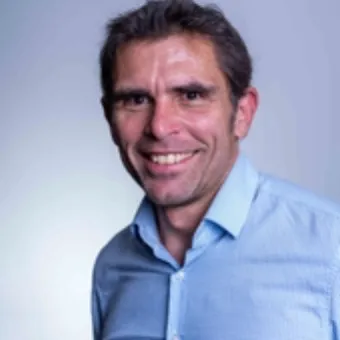
With palpable excitement in the air, TechDay sat down with Microsoft ANZ CTO Sarah Carney on the sidelines of the company's AI Tour just ahead of the keynote kickoff. The Tour itself represents the ramping up of Microsoft's AI efforts and included a visit, keynote and some high-level shoulder rubbing for CEO Satya Nadella.
For Carney, the most thrilling aspect of the AI Tour? Not, it turns out, the technology: "I mean, having the CEO in town is absolutely phenomenal," she enthuses. "But I think the thing that I'm really excited about is the announcement this morning around the fact that we are now investing in another 200,000 people, skilling them in AI here in New Zealand. So that is on top of the 100,000 we'd already committed to. And people need skills, so the investment into New Zealand is just phenomenal and will help bring quite a few more people along that journey."
This is both an enormously telling and comforting point which brings to mind the concept of the few and the many. Ignore the obvious at your peril; there is little doubt that in addition to the 'Saas-pocalypse' discussed in several recent interviews, there's also the distinct likelihood of an AI-driven 'job-pocalypse'. Some might even say it's rolling out right now.
People's jobs are, incontrovertibly, being affected by AI. I myself, the writer of this article, have had my work directly and permanently affected by AI. Written content has seen a flight to AI-produced mediocrity because most content doesn't need Pulitzer levels of quality. It needs to be good enough; mediocre is quite adequate.
Every time new technology is introduced, the same issues arise. The many benefit, even as the few experience transitional downsides. In the eighteenth century, the few were employed in making cloth. With Arkwright's invention of the water frame, spinning cotton became faster, with stronger and better output. While it imperilled the livelihood of the few, it made clothing more affordable and plentiful for the many; not only that, but far more people were eventually employed in a vastly expanded textiles industry.
This is a story as old as time, despite all the 'this occasion it will be different'. Microsoft knows it. That's why it is investing in upskilling as a major component of its technology rollout. Cui bono? The many. All of us.
However, there's still the challenge of addressing the worries and concerns that come with such a massive change. It's about emphasising that humans still have to be at the heart of what's happening, and focusing on what will benefit us most, says Carney.
"It is very easy to think about AI as a technological change, but we're suddenly seeing it as completely flipped, and it's a human change," she says. "Technology is following and supporting, as opposed to technology dictating what it is that people need done."
This is a traditional challenge in the tech space which can be summed up as 'you can lead a horse to water, but not make it drink'. Despite the shadow IT (which Carney agrees is epic in its extent, despite the relentless 'rah rah' of the industry and society at large, there is still an adoption problem (and, presumably, a 'monetisation' problem for vendors).
"We're grappling with a whole lot of different things at the moment," Carney continues. "The first is comfort, inertia. [People ask] why? Why would I do things any differently? I've always done it this way?"
There's the whole SkyNet thing, too, and apocalyptic visions, and the eschatological thinking that pervades society hence the endless zombie/fallout movies. "So, there has to be a reason for you to shift [to using AI in business]. It's that aha moment. The other piece is the psychological safety piece, which is that we've been telling everybody dystopian stories for decades about how AI is going to kill us, right?"
Right. We both laughed at that, perhaps nervously.
"The challenge is that now we're saying, 'well, I know you've grown up hearing this, but in your workspace or in your personal life, I'm asking you to do this thing'. So there's this cognitive dissonance that emerging, and that's what organisations are grappling with. How do we move people from their comfortable space to the new space? And it's why you find some AI programs not getting return on investment, because they haven't worked through that aspect. They haven't actually looked at the people piece."
The tech, says Carney, is the easy part, even though in the AI field, for the longest time it wasn't. "Yeah, it's the people piece that's hard. And that's the piece that organisations really need to hone in on. How do you move people in this moment? How do you give them comfort? How do you find a purpose or a reason? And it's the shift you will now see."
Microsoft, certainly, has seen it. Because on stage it was this aspect that none other than Satya Nadella himself was talking up, just moments after the interview with Sarah Carney wrapped.