

Inside Adobe's fast-moving AI partnerships team
Thu, 12th Nov 2026 (Today)
Adobe's partnerships team is completing agreements in days and weeks instead of months these days. This is as Adobe brings external models into its applications and makes its tools available through other AI platforms.
Shilpa Anand, who leads the team, described a process that previously involved months of planning. Senior executives at partner organisations are now directly involved in detailed decisions, helping agreements come together more quickly.
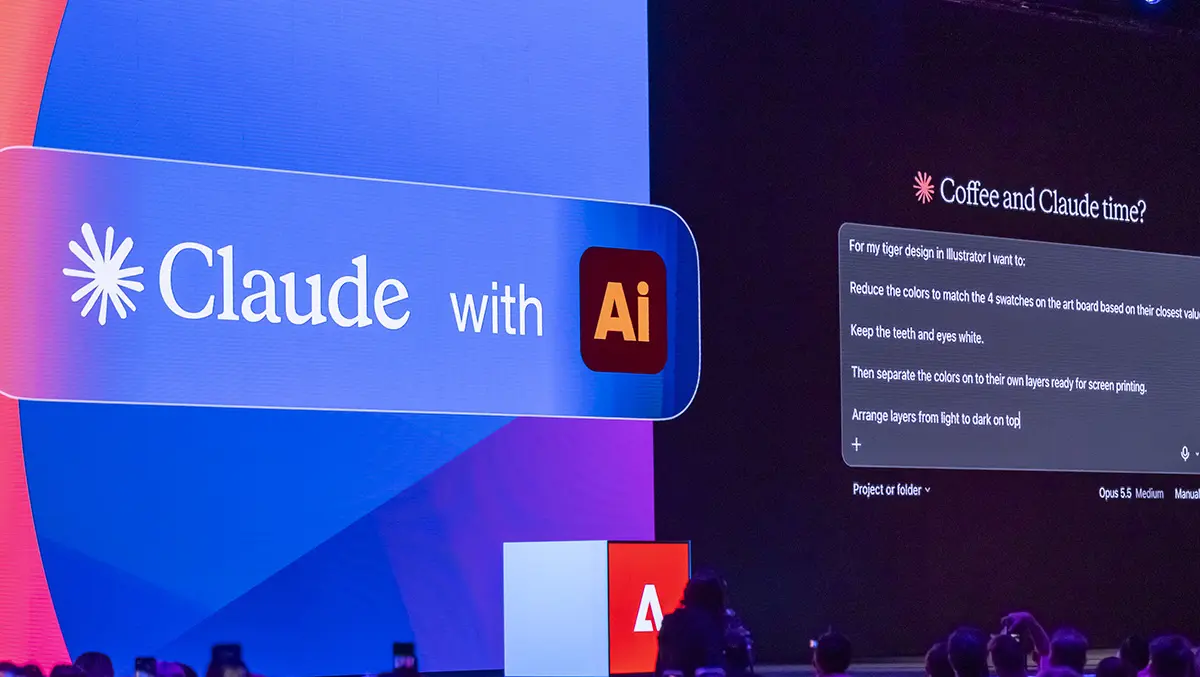
The team's work runs in two directions: integrating other providers' AI into Adobe products and taking Adobe's capabilities to services such as Claude, Gemini, Copilot and ChatGPT. Its remit also includes working with chip suppliers to improve application performance and support AI processing on users' devices.
Anand joined Adobe less than a year ago, following roles at Google and Microsoft. Alongside partnerships with technology providers, her team is working with enterprise customers on models tailored to their intellectual property.
Disney models
"We're in the early days of these custom models, and working with Disney is going to give us a strong foundation to go and replicate that with other customers. We would love to do that. I think that is the end vision: this availability of building these custom models. Disney is a partner we've been working with. Their use cases were perfect for some of the things we need to build a foundation of expertise on doing this well. But we're starting with Disney as a key partner. We do have other partners where we've done it, but the scale of Disney is going to really enable us to set up a foundation to do this at a global scale," said Shilpa Anand, VP Global Strategic Partnerships, Adobe.
Disney's proprietary models, developed through Firefly Foundry, will remain exclusive to the entertainment company. They will not be available to the public through Adobe products or third-party AI connectors.
Anand described the arrangement as an enterprise implementation rather than a model intended for general distribution. Adobe will not expose the models through Model Context Protocol endpoints, which connect AI systems with external tools.
Adobe and Disney announced a multi-year strategic alliance on 9 November. The agreement provides early access to Adobe technology and dedicated engineering and research support. It also covers collaboration with The Walt Disney Studios' StudioLAB and ESPN Edge, alongside work at Imagineering.
Imagineering already uses a sketch-to-image model that turns hand-drawn concepts into rendered two-dimensional artwork, and a custom image model that produces assets consistent with Disney franchises, according to Adobe.
The work also includes exploring theme park designs and visualising intellectual property in three dimensions. Custom models could be built on Adobe's own models or third-party models for which it holds the necessary licences, Anand said. She declined to comment on Disney's copyright disputes with other AI companies.
Platform reach
Adobe's wider AI ecosystem includes more than 30 models, according to Anand. Within its applications, the goal is to give users access to those models without requiring them to switch services.
On external AI platforms, Adobe wants its connectors to let users complete tasks within those environments. Its work on AI agents began with a presence on Claude before expanding to Gemini, Copilot and ChatGPT.
Adobe is also working with partners on how their platforms decide between using native capabilities and calling an external connector. These discussions cover how Adobe's tools are accessed from within another provider's service.
An expanded Google partnership, announced on 10 November, will make Acrobat available through Google Drive and Gmail, expand Adobe's Gemini connectors and bring creative tools to AI Mode in Google Search. Google's image and video models are also due to reach more Adobe applications.
Adobe also works with specialist generative media providers, including Luma and Runway. Model selection involves balancing the breadth of its offering against the capabilities customers request. Anand identified the combination of AI models and established software tools as a priority for further partnerships.
Local demand
"We're absolutely open to it. We are very much driven by what our customers want. So the way we are bringing in models is prioritised by the ask we're getting from customers. If you saw, we announced Seedance yesterday, and I think Forrest talked about it in his keynote. These are models that our customers have been asking for on video, so we're happy to look at the India ecosystem of models and see what makes sense, especially as we go deeper into markets and those language optimisations, local optimisations that these models bring. We would love to bring them in on the Gen Media side," said Anand.
Availability still depends on regulatory requirements and Adobe's own standards. The starting point is to offer models globally, but Adobe will not bypass restrictions that prevent their use in a particular country.
Roll-outs can therefore happen in stages. Anand cited Seedance as a model introduced outside the United States before becoming available there.
External models are accessed through their providers' application programming interfaces when users select them. Adobe's contracts include requirements against data retention, Anand said, with customer ownership of data guiding those arrangements.
She did not give a general assurance on data sovereignty. The details depend on each implementation and would require follow-up.
Device plans
Adobe is also expanding its work on AI that runs on users' devices. Anand pointed to Apple's M-series chips, Nvidia hardware and Microsoft's work on local processing as relevant areas.
Topaz Labs' on-device models were another example she identified in Adobe's work on local AI processing.
A separate collaboration with Nvidia involves applying capabilities from its physical AI models to Adobe's video models, following a partnership announced in March.
The Microsoft partnership includes versions of Photoshop, Premiere, After Effects and Substance 3D Painter optimised for Arm-based Windows PCs. Adobe also announced plans to integrate Express creation tools into Microsoft Photos.