

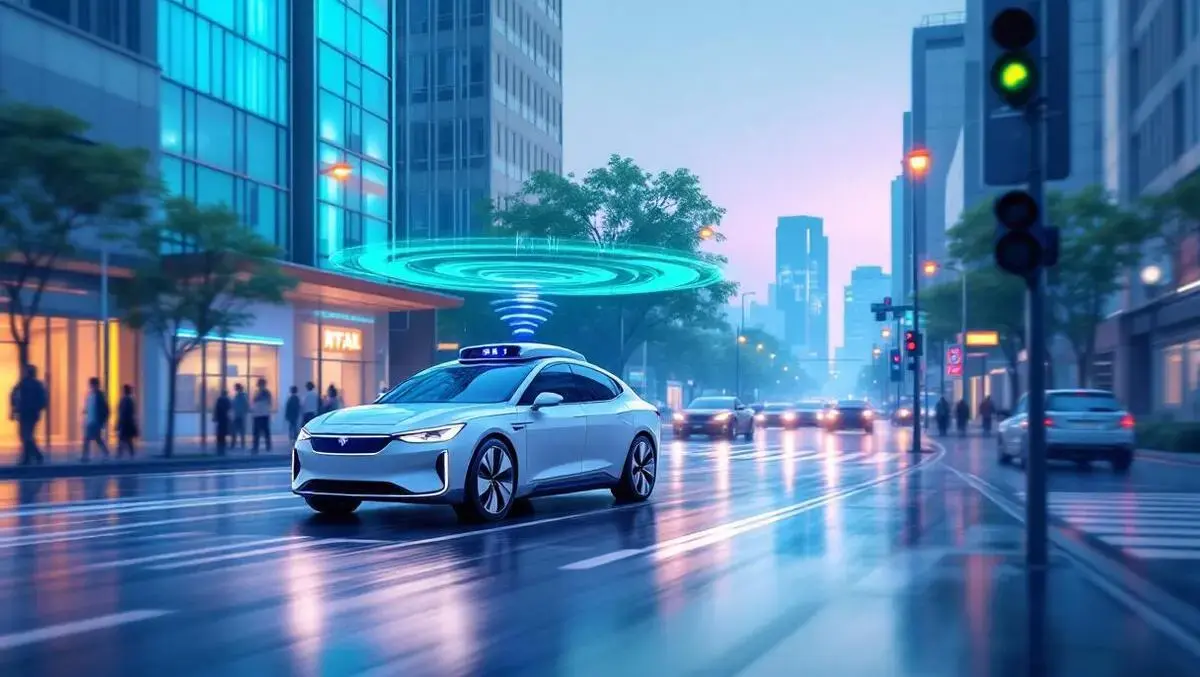
bitsensing launches AIR4D radar for autonomous vehicles
Fri, 15th May 2026
bitsensing has launched AIR4D Imaging Radar for autonomous vehicles, aimed at real-world fleet deployment.
The South Korean radar company says the system gives developers direct access to raw radar outputs and high-resolution 4D sensor data, including point cloud and Doppler information. That sets it apart from many existing 4D radar products, which operate as closed systems and do not provide customers with all underlying test data.
Access to raw radar data has become a focus for companies developing self-driving systems because it allows engineers to train perception models, validate performance and adjust software using information gathered in testing. bitsensing is positioning AIR4D as a sensor that can help move autonomous vehicle programmes from trials to broader commercial use.
Built for AVs
AIR4D was designed specifically for autonomous driving rather than adapted from radar products built for advanced driver assistance systems in passenger cars. That distinction matters because autonomous vehicle developers generally need sensor data tailored to the machine learning models used for perception, planning and object tracking.
The radar was also designed with power and heat efficiency in mind, factors that can affect how reliably sensor suites perform when vehicles operate for long periods in real traffic conditions. bitsensing says the product supports a camera-and-radar approach that could lower per-vehicle sensor costs compared with more complex sensor stacks.
The launch comes as developers of robotaxis, autonomous shuttles and other self-driving fleets face pressure to show their systems can operate consistently outside tightly controlled pilot zones. Sensor choice has become central to that effort, particularly in poor visibility and low-light conditions where cameras alone can struggle.
Sensor data
According to bitsensing, AIR4D offers direct velocity readings for individual objects, allowing a vehicle to determine how quickly nearby cars, cyclists and pedestrians are moving. The radar has a detection range of up to 300 metres, which could give automated driving systems more time to identify hazards and react.
The sensor can also operate in near-total darkness and remain stable in rain, fog and snow. Millimetre-wave radar is widely used in automotive sensing because it can detect distance and movement in conditions that reduce visibility for optical sensors.
One long-standing limitation of earlier automotive radar systems has been lower environmental detail than camera or lidar systems. bitsensing says 4D imaging radar addresses part of that issue by adding elevation data, allowing the system to build a richer picture of its surroundings and better distinguish between different types of road users and objects.
That additional dimension is important in urban driving, where automated systems must separate pedestrians from vehicles, identify roadside structures and track movement across multiple lanes. In practice, radar is often used as part of a combined sensing system rather than as a standalone tool, with camera inputs providing image detail and radar contributing distance and velocity measurements.
Funding and market
Founded in 2018, bitsensing has expanded from automotive radar into sectors including smart cities, connected living and health technology. It says it has raised USD $52 million from investors including AF WPartners, Korea Development Bank and Mando.
The wider market for autonomous vehicle sensors remains crowded, with radar, lidar and camera suppliers all arguing for different system designs as operators seek a balance between cost, redundancy and real-world reliability. For fleet operators trying to move beyond test programmes, access to raw sensor outputs may become increasingly important as they refine in-house software rather than rely on fixed sensor processing from vendors.
In a statement accompanying the launch, Dr Jae-Eun Lee, chief executive officer of bitsensing, said: "By delivering high-resolution 4D perception data, including, importantly, all raw data outputs, our goal at bitsensing is to empower autonomous vehicle companies to build systems that at speed and at scale."