

Alvest launches TLD Robotics after EasyMile takeover
Wed, 30th Sep 2026.webp)
ALVEST has launched TLD Robotics after acquiring EasyMile and TractEasy, bringing the group's autonomous ground operations activities together under one brand.
TLD Robotics combines EasyMile, TractEasy and TLD's existing driverless operations. It will focus on autonomous material movement across airports and industrial sites, where operators are increasingly testing and deploying driverless vehicles for baggage, cargo and other on-site transport tasks.
Richard Reno will lead the business as Chief Executive Officer within the ALVEST Group. The move formalises nearly a decade of joint work by TLD and EasyMile, with TractEasy acting as the commercial vehicle for some deployments.
At launch, TLD Robotics said it had logged more than 50,000 autonomous missions across more than 35 operations in over 10 countries. Deployments include projects with BMW Group, Bosch, John Deere, Lufthansa Cargo and dnata, as well as work at Munich and Narita airports and with Daimler Truck.
Many of those operations now run around the clock, reflecting a shift from pilot schemes to regular use in live industrial and airport settings. The company said its autonomous fleet is tripling each year and is already growing faster than earlier forecasts.
Operational base
The business enters the market with a broad footprint, supporting more than 15 airport operations and more than 20 industrial deployments. It is backed by engineering, deployment and support teams across North America, Europe, Asia and the Middle East.
TLD Robotics aims to distinguish itself by combining vehicle design, software development, deployment and after-sales support within one structure. The approach reflects a wider trend in industrial automation, as buyers seek fewer suppliers and clearer accountability when introducing autonomous systems into working sites.
It will offer supervision software to coordinate fleets, on-board software for each vehicle, purpose-built vehicle platforms, and fleet and operations management. The business also draws on TLD's manufacturing network of 12 factories in seven countries.
That industrial base matters because autonomous systems in airports and logistics yards must operate in controlled but still busy environments, often alongside conventional vehicles, staff and fixed infrastructure. Airports in particular have long been seen as well suited to early commercial adoption because of their structured settings, even as broader autonomous driving efforts on public roads have faced delays.
Reno said the combined business is intended to move beyond experimentation and support wider deployment. "When TLD and EasyMile began working together in 2017, autonomous GSE was still seen as a future concept," said Richard Reno, Chief Executive Officer, TLD Robotics.
"We saw the opportunity in structured environments like airports and logistics hubs early and have turned that vision into a proven business. Since creating TractEasy three years ago, we have scaled tenfold. With TLD Robotics bringing the same vehicles, teams and proven deployment record under one name, backed by a strong industrial base, we now have the platform and ambition to scale another 10x over the coming years," Reno said.
Market pressure
The launch comes as operators across airports, freight terminals and industrial sites face pressure to improve safety, manage labour shortages and cut costs. Autonomous site vehicles are being pitched as one response, particularly on repetitive, predictable routes such as towing cargo dollies, moving baggage or transporting materials between fixed points.
ALVEST said those customer pressures were one reason for bringing the businesses together now. The group also pointed to decarbonisation targets as part of the case for automation, although the announcement focused mainly on site operations rather than broader transport networks.
Valentin Schmitt outlined the parent group's rationale for expanding in autonomy. "Automation is the future of our business," said Valentin Schmitt, President & Chief Executive Officer, ALVEST.
"Every operator we work with faces the same pressures: safety, labor availability, cost and decarbonization. Autonomy addresses them all and is a natural extension of our Leaner & Greener strategy. ALVEST brings the long-term ambition, industrial strength and financial capacity to deploy at scale. Our customers are not buying a pilot; they are investing in decades of operations - and that is the timeframe ALVEST is built for," Schmitt said.
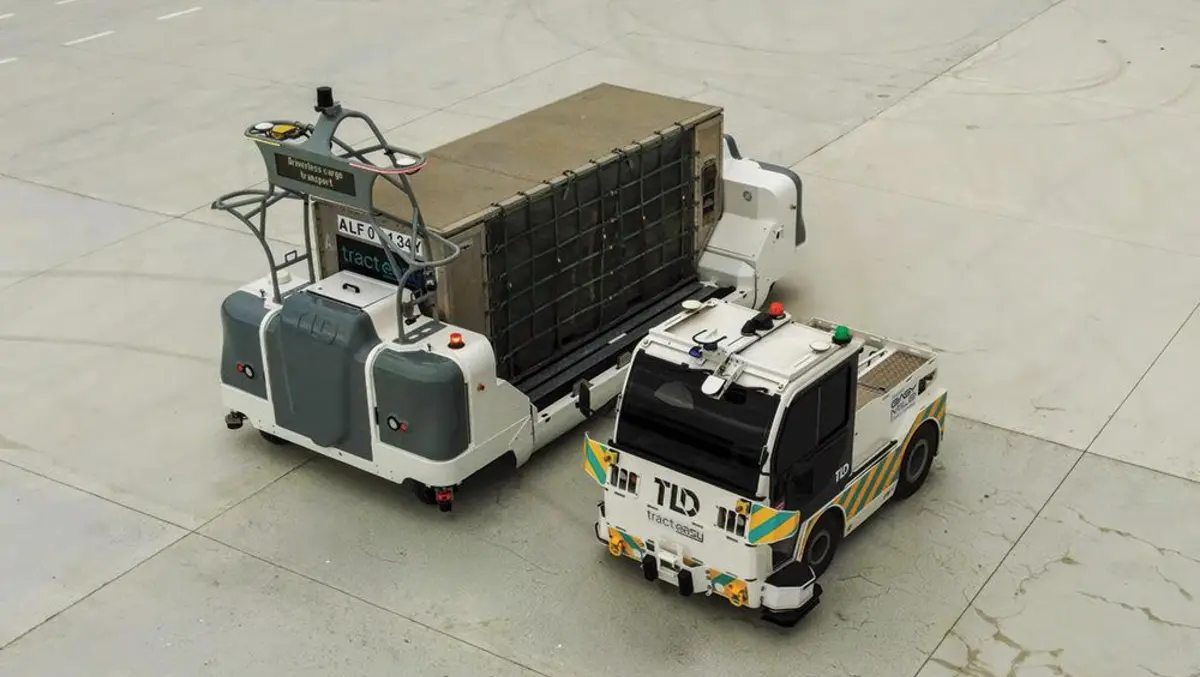
TLD Robotics said it will continue all business engagements and deployments previously carried out under the TractEasy name. Its current fleet includes autonomous tow tractors and cargo-handling vehicles designed to move materials across indoor and outdoor routes in airport and industrial environments.