

Advantech expands NVIDIA tie-up with AI factory brain
Fri, 5th Jun 2026
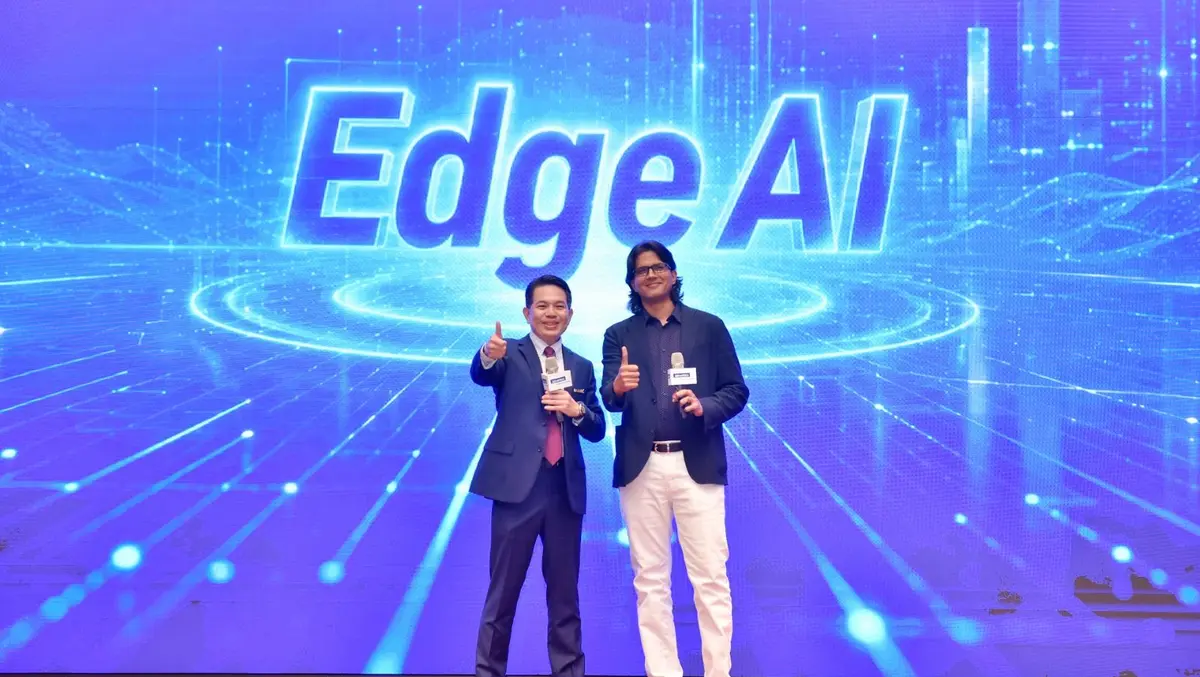
Advantech has expanded its collaboration with NVIDIA to introduce an AI-based factory architecture for manufacturing operations centred on what it calls an AI Factory Brain.
The design combines NVIDIA software and computing products with Advantech's WISE-Edge Developer Architecture, or WEDA, to connect factory systems, shop-floor sensors and industrial devices. It is intended to bring AI into routine factory processes such as monitoring, inspection, logistics and energy management.
Central layer
At the core of the architecture is a multi-agent system built with the NVIDIA Factory Operations Blueprint, with a factory manager agent serving as the main control layer. The software is designed to monitor anomalies, identify likely root causes and coordinate responses between software agents and human operators.
The system draws data from business and factory software, including SAP, manufacturing execution systems and warehouse management systems, as well as edge sensors on the factory floor. It also uses NVIDIA NemoClaw, Omniverse, Metropolis and Isaac Sim to automate workflows, manage energy use and improve metrics such as overall equipment effectiveness, yield and mean time to repair.
Advantech also outlined hardware platforms for different parts of the factory environment. Its MIC and ICAM edge devices are based on NVIDIA IGX Thor, Jetson Thor and Jetson Orin, while inspection and edge inference workloads are assigned to products including the ICAM-540 camera and MIC-743-AT platform.
These systems are intended to support automated optical inspection and local deployment of large language model and vision language model chatbots. The setup can be used for defect detection, production analysis and natural-language interaction with operators.
Logistics focus
In logistics and warehousing, Advantech's AIR-427A and AFE-A702 platforms are designed for use in forklifts, humanoid robots, autonomous mobile robots and mobile manipulation robots. The systems can support navigation, robotic handling and coordination across the shop floor, while software agents adjust work priorities and provide guidance to operators.
The announcement also emphasised governance and safety. According to Advantech, NVIDIA NemoClaw includes a secure runtime and policy framework for security controls, access management and operational oversight, while the MIC-735-IT and AIR-427A platforms support functionally safe AI computing for robotics and autonomous industrial systems.
Miller Chang, President of Advantech Embedded Sector, described the announcement as a broader step in the company's manufacturing AI strategy.
"Advantech's collaboration with NVIDIA represents a major milestone in the evolution of AI-powered smart factories. By integrating the NVIDIA AI Factory Brain concept with Advantech's Edge AI and WEDA ecosystem powered by NVIDIA NemoClaw and NVIDIA full-stack edge AI computing platforms, we are enabling factory-wide intelligence through agent-driven AI, software-defined orchestration, and autonomous operations - creating a proven and replicable blueprint for the next generation of intelligent manufacturing through Physical AI.," said Chang.
Factory trials
Advantech has tested parts of the architecture in its own manufacturing operations through two AI agent pilot projects using NVIDIA NemoClaw. One project, called iEnergy Agent, links production schedules with vision AI feeds and supervisory control and data acquisition systems to manage heating, ventilation, air conditioning and lighting.
Full deployment of that system is expected to cut total factory energy consumption by 10%. A second project, the Production Line Efficiency Agent, uses vision AI to capture assembly-line data, analyse productivity, identify anomalies and bottlenecks, and generate recommendations and shift reports.
According to Advantech, that pilot has been in place for about six months and has produced a 12% improvement in assembly-line productivity. The figures are among the few concrete indicators in the announcement of how the architecture performs in an operating plant.
The collaboration reflects continued demand among manufacturers for systems that tie AI models more closely to physical operations, particularly in inspection, maintenance, warehouse automation and robotics. Suppliers in the sector are increasingly framing factory software around agent-based tools that can interpret data across multiple systems and trigger actions on the shop floor.
For Advantech, the move extends a long-running relationship with NVIDIA and gives the Taiwanese industrial computing group a clearer role in linking edge hardware with AI software inside factories.