Patching stories
Hidden endpoint blind spots are leaving Southeast Asian firms exposed to downtime, data leaks and losses above USD $1 million.
Unauthorised access could let attackers send arbitrary commands to spacecraft and instruments via NASA's AIT-GUI console, now fixed in version 2.5.2.
Fast-moving exploits are shrinking patch windows to hours, making network segmentation vital for protecting cameras, medical devices and other connected assets.
Patch backlogs are leaving organisations exposed, with 85 high-impact flaws flagged across Australia and New Zealand, up 44% in July.
Stolen credentials and AI-generated phishing are accelerating attacks, as Flashpoint tracked 22 million illicit discussions and 7.4 million infected hosts.
Security teams could gain more useful risk signals as NIST weighs changes to the National Vulnerability Database amid surging flaw volumes and AI use.
Support teams can now handle device context and remediation in one place as PDQ widens its Windows and macOS management tools.
IT teams can now handle Mac and Windows vulnerabilities in one workflow, while support agents gain ticketing links that cut manual lookups and errors.
Smaller operators face faster, cheaper attacks as Five Eyes agencies say frontier AI could reshape cyber threats within months.
Security teams could spot newly disclosed flaws within minutes as rising CVE volumes and faster attacks squeeze response windows.
Organisations now have just 48 hours to patch most flaws, as AI helps attackers weaponise vulnerabilities far faster than before.
Their work has become more strategic as cyber security, AI and tighter budgets put extra pressure on the teams keeping systems running.
IT teams can now issue endpoint tasks from AI assistants, with PDQ keeping permissions, authentication and audit trails intact.
Supermarkets and hospitals could face spoiled stock and medicines after flaws in two widely used refrigeration controller platforms were disclosed.
Eligible US universities and non-profits can now use Lightwell to patch open source flaws without overhauling systems or sharing data.
The update aims to cut remediation costs and stop teams wasting time by re-analysing vulnerabilities without enough business context.
Security teams face faster, stealthier intrusions after AI agents managed to breach live systems in controlled tests by Anthropic and OpenAI.
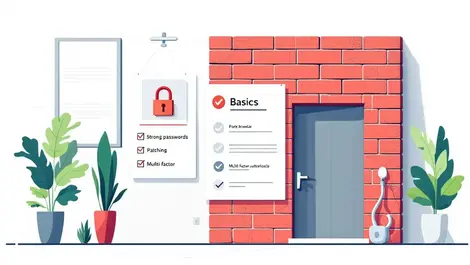
Small firms may miss basic cyber gaps as a free self-check from MY CYBER GUARD flags weak passwords, patching and backup risks.
Email-borne attacks can now be tracked alongside endpoint and network threats as eSentire folds patching and response into Atlas AI Platform.
Customers can now track security weaknesses in real time, as GuardNest moves beyond annual checks to constant scanning and remediation.