Benchmarking stories
Enterprises can now benchmark AI inference workloads on Qualcomm's Dragonfly AI200 through Cirrascale's cloud before committing to production.
The new versions are designed to cut task costs and improve performance on finance, law and coding work across ChatGPT Work and Codex.
Cheaper AI coding models can be less risky than premium rivals, with Secure Code Warrior finding prompt rules cut vulnerabilities by up to 70%.
Manual accounts payable can become one of the fastest-growing costs in a company, with invoice processing running at about $6 each.
The benchmark suggests the Australian company could sharply cut data centre load, with its system delivering edits 38 times faster than rival AI tools.
Rising AI coding spend is pushing engineering teams to tackle review delays and release bottlenecks, as LinearB adds a new context layer.
The open model is aimed at regulated sectors needing on-premise control over code and cyber work, while benchmarking atop open rivals.
Google says teams should judge AI coding agents on what they execute, after internal tests showed final replies can hide successful tool use.
Cyber defenders are getting first access as Google rolls out its latest AI model in stages, with wider use to follow after testing and review.
The model targets business forecasting tasks such as demand planning and inventory management, with H2O.ai saying it beat 31 rivals on fev-bench.
Interest is rising in AI tools for business software as Codebridge's new product turns text into structured decisions for developers.
Connect rates have risen to as high as 29% in TitanX's benchmark, as the new tool cuts dials and aims to improve meeting bookings.
Private markets firms can now link Claude and ChatGPT to Allvue data and workflows, cutting manual processing across credit and fund administration.
Google says many AI coding skills fail unless teams test routing, security and repeatability in a clean sandbox, not on a laptop.
Researchers can now test whether frontier models can produce safe, code-compliant engineering designs, after Google released an open benchmark with 29 public tasks.
Built from refurbished servers, the Ottawa project is testing whether one researcher can run local AI systems with greater control and transparency.
The startup says its simulation tool could cut costly robot training and reduce the risk of damaging machines before deployment in factories and warehouses.
A new contest worth USD $300,000 is meant to draw more people into finding hidden flaws in AI systems as prompt injection worries grow.
The ranking bolsters the smaller San Francisco-based lab's pitch to commercial users, as its editor outpaces rivals from Google, Meta and ByteDance.
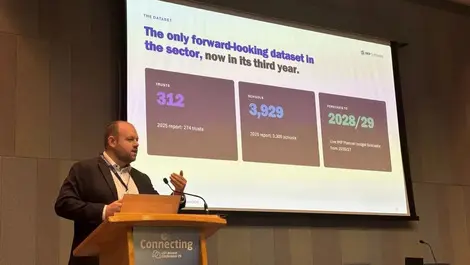
Almost four in ten multi-academy trusts expect to run a deficit next year, while reserve headroom is set to tighten further by 2028/29.