

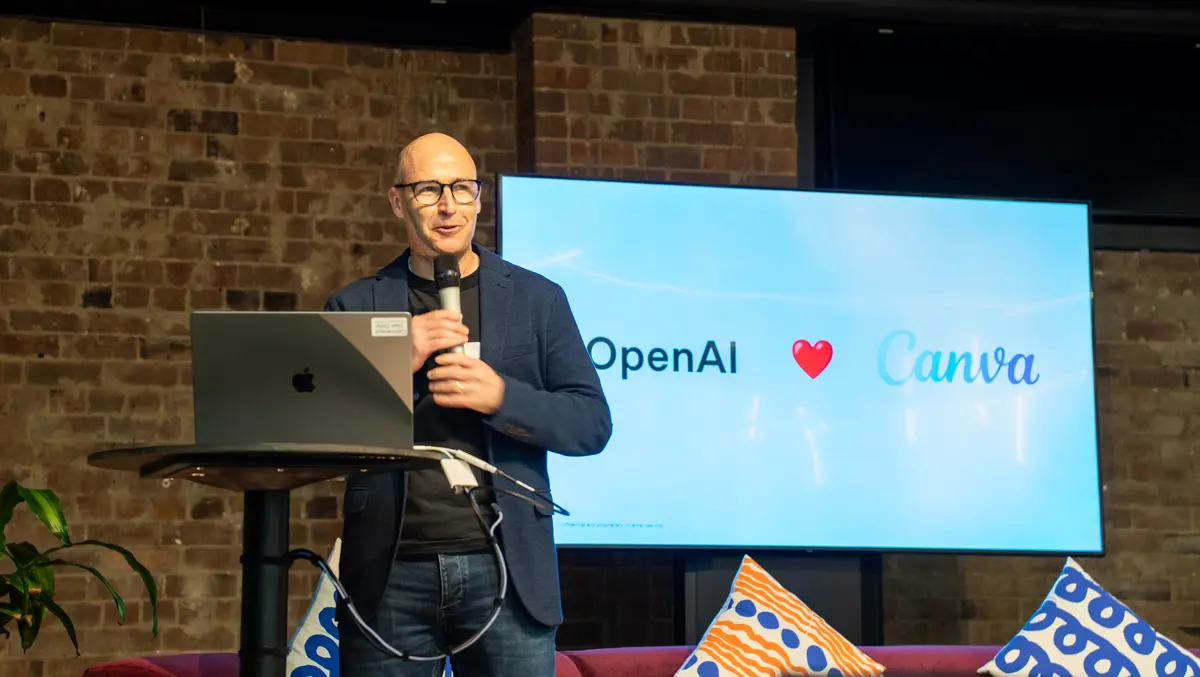

Over 20 of Australia's best-known nonprofits, ranging from disease research and awareness to surf lifesaving and women in STEM, recently converged in Surry Hills, Sydney, for the Canva x OpenAI Build for Good nonprofit hackathon.
In totality, representatives from these nonprofits spoke of hundreds of man-hours per week dedicated to back-office admin that takes staff away from their organisation's primary mission, whether that is saving lives on NSW's picturesque coastline, boosting awareness and funding for horrible, insidious diseases like motor neurone disease (MND), or improving outcomes for young women and girls in STEM.
What also became apparent was the fact these organisations operate under significant constraints, utilising very limited resources to the best of their ability.
It is not often their staff at these small organisations are blessed with the assistance of full-time coders or software engineers, so while they would welcome any productivity gains from AI tools, many of the nonprofits have been unable to harness the power of automation in their everyday workflows.
A recent study commissioned by OpenAI of over 250 workers within the nonprofit industry found that 70 per cent spend up to 15 hours a week on admin, and more than one in three (35 per cent) identify their admin workload as a major operational challenge.
Some workers, however, reported significant time savings when successfully implementing AI tools, with 31 per cent able to shave more than seven hours off their weekly admin, freeing up time for meaningful community outreach and real impact.
With Codex working away on her laptop, Brianna Coyte of Surf Lifesaving NSW explained how just a handful of full-time staff juggle being on duty for an organisation that covers over 2000km of shoreline, and close to 900 postcard ready beaches.
Coyte's organisation has begun installing cameras with AI functionality at its beaches that track people potentially in trouble in the surf and send alerts to head office, as well as nearby lifesavers.
When seconds matter in life-threatening scenarios, AI and automation will have a significant role to play as emerging technologies predict and adapt to human behaviour.
While the passionate, dedicated staff of these nonprofits and charities would like nothing more than to devote all of their time to making tangible community impact and serving their communities, almost all admitted they spent too much time buried in spreadsheets, email and various other cumbersome, repetitive tasks throughout their weeks.
The brief on the day was simple: using OpenAI's Codex, as well as Canva's Model Context Protocol, teams were tasked with building a real operational workflow that would reduce time-consuming admin for their organisation.
"We've been hearing from a lot of not-for-profits that they'd like to understand AI more and they'd like to think about using those tools," said Head of Public Policy ANZ at OpenAI, Brent Thomas.
"But they often don't know exactly where to start and what the first step might be.
"Forty per cent told us that if they could get time back, they would invest that time into delivering frontline services for the people, the communities that they set up to serve. But they didn't necessarily know where to start.
"So we combined with Canva today, because they've done a lot of work with us. Today is about giving them access to experts from OpenAI, but also from Canva so that they can tackle some of those real-life problems they've got in their organisations."
With hard hats being dutifully worn - safety first - Canva and OpenAI staff were hovering around to lend a hand when teams came upon a roadblock.
Although staff from the participating nonprofits and charities came from different demographics with varying technical ability, there was a collegiate atmosphere at Canva's Sydney headquarters, with teams enjoying the challenge of building AI tools.
Originally founded as a humble publishing company in Perth by three Australian entrepreneurs, Canva has evolved into a design behemoth and one of the nation's most revered exports, especially in the creative and software space, where Atlassian has also experienced considerable success.
The nonprofit hackathon is a key example of 50 per cent of Canva's concise, yet ambitious two-step plan: becoming the world's most valuable company, while doing the most good.
While the former goal may be out of reach for now, with competition including the likes of Apple, Google and Nvidia, the latter is a mission that its team are genuinely passionate about achieving.
As well as extending the invite to over 20 nonprofits on the day, Canva will release free resources for any nonprofits or charities in Australia to utilise.
"As part of (the two-step plan), we can provide our non-profits and members of our community with the best and greatest technology and help them upskill, and see where their issues are lying," said Head of Design for GenAI at Canva, Christina Jones.
"We can build a product better for them. It also helps them have less admin, so they can focus on their day-to-day work and serving everybody.
"We've also had a really strong partnership with OpenAI and many other companies as well. This is how we can, with OpenAI coming into ANZ, bring their value and what they're providing and bring that to the community here in Australia as well."