

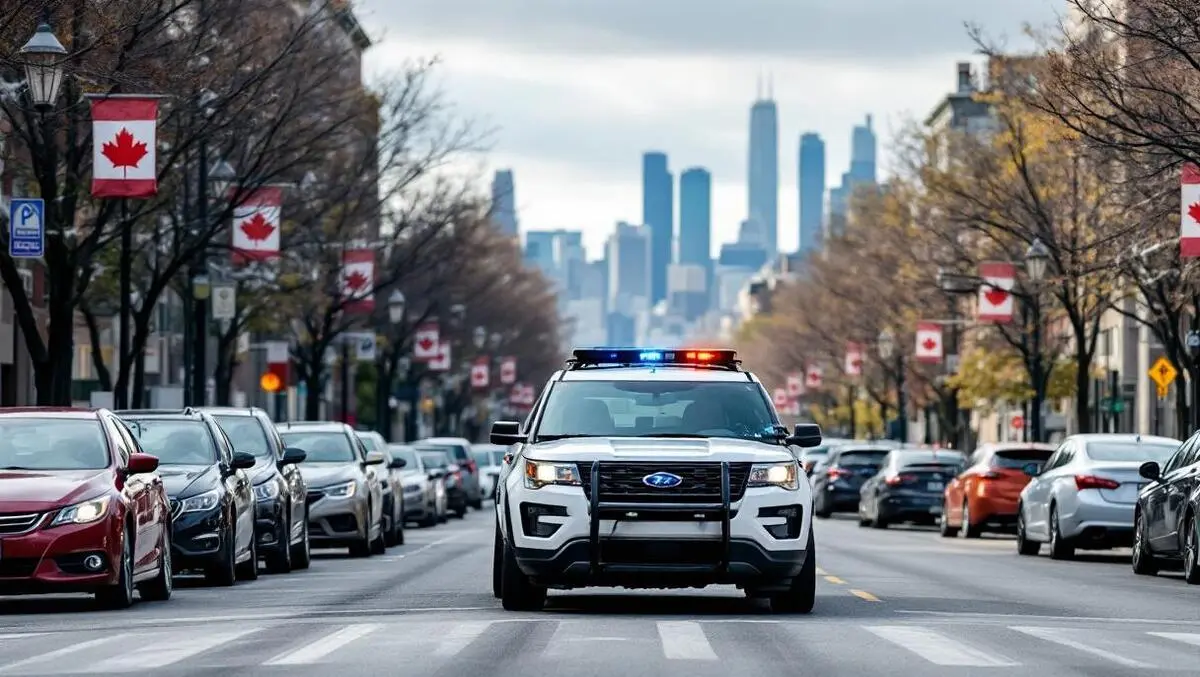
SenSen expands AI parking enforcement across Ontario
Thu, 19th Mar 2026
SenSen Networks has expanded its AI-based compliance and curb management work across Ontario's urban corridor, with deployments clustered in and around the Greater Toronto Area and extending east toward Montreal.
The Australian-listed company says the rollout is showing a "network effect", with neighbouring municipalities adopting similar approaches after seeing results in nearby cities. It says the same dynamic is emerging in parts of the United States.
Ontario cluster
Kitchener was the first Ontario city to deploy SenSen's AI-driven enforcement platform. The city received the Canadian Parking Association's Innovation in Parking Operations Award for what SenSen described as improved citizen outcomes. Nearby municipalities then took interest after observing changes in efficiency and safety.
Toronto is another major deployment. SenSen has used AI-enabled cameras to capture and analyse streets, which it says has expanded visibility into parking operations.
The Toronto Parking Authority described the work as a shift from limited visibility to an operational view of street-level assets and conditions.
"We started with a simple need - how could we improve our operations, and in turn, better serve our community and our customers," said Faiyaz Patel, Director Parking Development at the Toronto Parking Authority. "We understood that we needed to gain real-time visibility into our street-level assets with the help of technology, and it quickly became clear that digitisation of our parking assets was the answer."
In Toronto, the initial focus was inventory mapping, according to SenSen, before expanding into curb management. SenSen says the technology identifies parking metres, signage, and available spaces, and provides operational data that organisations have not previously collected at scale.
Patel said the work has expanded across the authority's portfolio.
"I view SenSen as my eyes on the street that captures accurate, on scale information that we need to better run our business. We now have metrics and KPIs behind what is actually happening on our streets with a very high level of accuracy, which gives us the ability to manage our assets and respond proactively to changing conditions. The partnership has now expanded across our portfolio," Patel said.
Enforcement shift
SenSen's compliance deployments sit within a broader shift in how councils manage kerbside activity, where demand for parking, deliveries, and short stops competes with road safety and traffic flow. The company is positioning AI-based enforcement and data capture as a way to modernise day-to-day work for parking teams and compliance officers.
Operational modelling from one long-standing Canadian city using SenSen's systems found that 11 officers are required to issue around 400,000 infringements annually. SenSen says the approach improved efficiency and increased kerbside compliance.
SenSen also cited reported productivity gains of up to 400% per officer after deployment. It says automated evidence collection has reduced disputes over citations, and that officers no longer need to approach vehicles or place tickets on windscreens during late-night patrols, reducing personal safety risk.
SenSen positioned the Ontario deployments as a reference point for other councils considering similar upgrades.
"When one city modernises compliance with AI, neighbouring municipalities observe the operational gains, from efficiency to safety to digital transparency, and momentum builds quickly," said Dr Subhash Challa, founder and global CEO of SenSen Networks.
Challa said cities are reorganising compliance work around automation and data-driven decisions, linking the shift to rising interest in other North American markets.
"Cities are redesigning enforcement around intelligence, automation, and data-driven operations," Challa said. "What we're building across these cities is a template for how that transformation spreads, and we're seeing the same dynamic beginning to play out across the United States as it takes a lead from the Canadian example."
Business context
SenSen says it has deployments in more than 60 cities globally, including Vancouver, Brisbane, Singapore, Montreal, and Calgary. The company sells technology that analyses data from cameras and sensors in public spaces, with a focus on street-level compliance and transport-related use cases.
In its latest financial update, SenSen reported AUD $15.4 million in FY25 revenue, representing 25% year-on-year growth. It reported gross margins above 79% and said it has delivered six consecutive quarters of positive operating cash flow.
SenSen says labour pressures and urban density are influencing council decisions on compliance and kerbside management, and expects further expansion of AI-based enforcement deployments across North America and other regions showing similar adoption trends.