

OpenLegacy unveils AWS hub for safer mainframe shift
Thu, 12th Mar 2026
OpenLegacy has launched OpenLegacy Hub, an Amazon Web Services-integrated platform designed to help organisations modernise mainframe and legacy applications incrementally, without downtime.
The product targets large organisations that still run mission-critical workloads on COBOL-based mainframes and related legacy environments. Many of these systems sit at the centre of core banking, insurance administration, public sector processing, and other transaction-heavy operations. Modernisation is increasingly tied to broader cloud adoption plans, as well as the data and software architectures used for machine learning and generative AI.
The mainframe modernisation market has long been shaped by a trade-off between the perceived safety of leaving legacy systems in place and the risks of large migrations. Big replacement projects have a history of delays and cost overruns. Even phased programmes can stall when teams spend long periods analysing dependencies and assessing application portfolios.
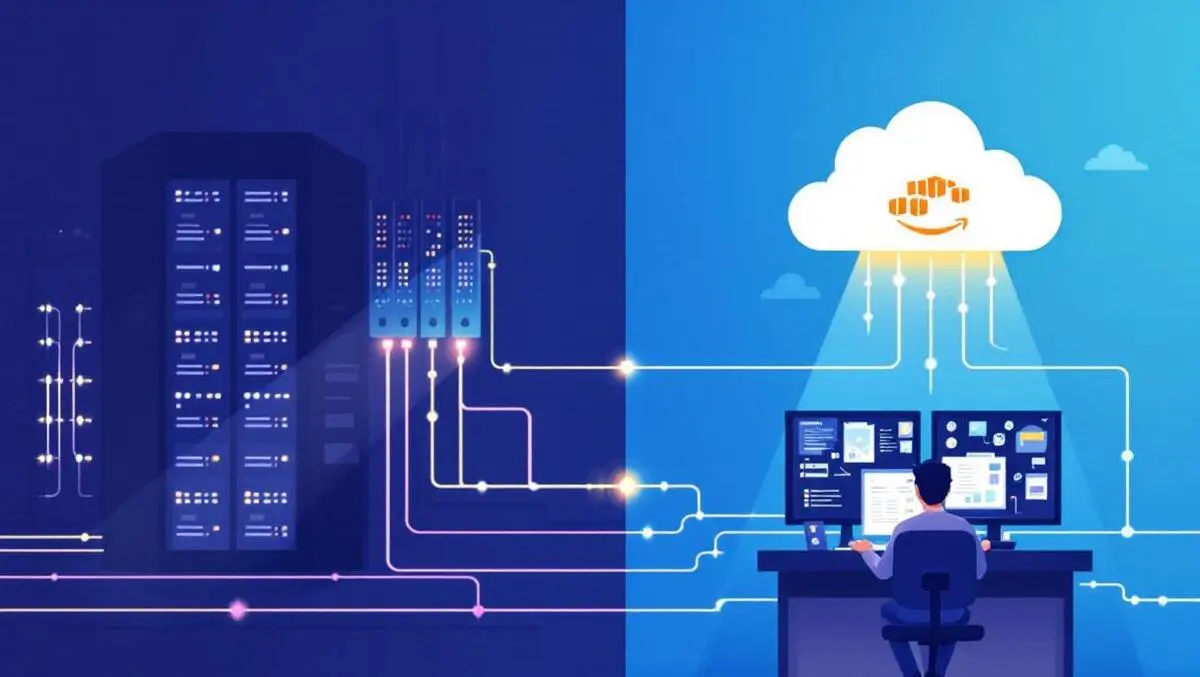
OpenLegacy Hub is positioned as an alternative: a model that lets organisations move in smaller steps while running legacy and cloud environments in parallel.
Incremental model
OpenLegacy Hub focuses on migrating core business logic from a range of legacy technologies, including COBOL, CICS, IMS, VSAM, RPG, and IBM i. It connects this work to AWS services such as AWS Transform, Amazon Bedrock, AWS Lambda, and Amazon Elastic Kubernetes Service.
In practice, the platform exposes functions and data from existing systems as APIs and event-driven services. This lets modern applications call into legacy capabilities without direct coupling to legacy terminals and data structures, and enables new software to consume legacy transactions as services.
A central element is parallel operation between legacy and cloud systems. OpenLegacy calls this "Risk-Free Coexistence", intended to keep business operations running while modernisation proceeds and to provide a fallback during the transition.
AWS integration
Customers will be able to access OpenLegacy Hub through AWS Marketplace, with planned integration into AWS Transform for Mainframe.
The platform uses AWS services for parts of the modernisation workflow, including generative AI to automate tasks such as code analysis, copybook mapping, and data transformation. Copybooks are data definitions used in COBOL environments. Mapping and transformation have been significant sources of effort in many legacy programmes, particularly when data models have evolved over long periods.
OpenLegacy also says the platform removes the need for "heavy middleware layers", aiming to reduce operational complexity during modernisation. Middleware is commonly added to integrate legacy systems with newer channels and services, but it can increase operational overhead and create additional dependencies.
Industry focus
OpenLegacy links the product to the needs of regulated industries. Large banks, insurers, healthcare providers, and government agencies often face strict requirements around uptime, security controls, and audit, making high-risk cutovers difficult to justify.
Modernisation programmes in these sectors also face pressure from faster digital product cycles. Many organisations want to launch new customer services, partner integrations, and data-driven analytics while retaining the reliability of existing transaction processing. Running systems in parallel is one way to balance those demands.
OpenLegacy says the platform supports an "AI-Ready Architecture" by exposing legacy data and business logic as microservices. This reflects a wider shift in which organisations treat core systems as systems of record that feed modern application layers. Many AI initiatives depend on access to curated business data and consistent business rules, which are often embedded in long-running mainframe applications.
Customer comments
OpenLegacy framed the launch as a shift in how AWS customers can approach mainframe transformation.
"OpenLegacy Hub and our continued work with AWS represents a fundamental paradigm shift helping our customers," said Ron Rabinowitz, CEO, OpenLegacy.
Rabinowitz added: "OpenLegacy Hub empowers AWS customers to start small, prove value quickly, and scale modernization efforts at their own pace 0 0all while maintaining complete operational stability. By continuing to build with AWS and through advancing our shared vision, we are making enterprise transformation both accessible and successful."
OpenLegacy says the platform is designed for organisations that want to validate system behaviour in production while reducing migration risk. It expects customers to adopt it through structured programmes that start with targeted workloads and expand across broader estates over time.