

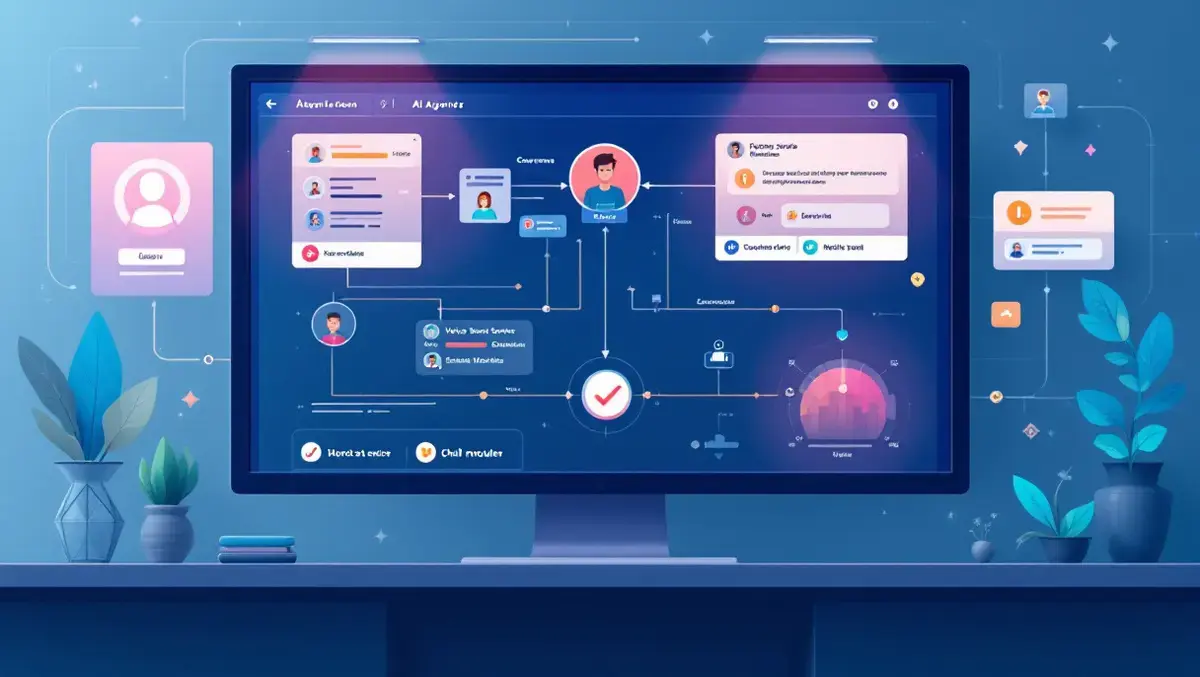
NiCE launches next-generation Cognigy for AI agents
Fri, 13th Nov 2026 (Today)
NiCE has launched the next generation of NiCE Cognigy for building and deploying AI agents, as businesses look to manage them at greater scale across customer service operations.
The new version is aimed at organisations that want to move beyond isolated automation tasks and manage AI agents across broader customer journeys. It includes tools for creating reusable skills, overseeing how agents make decisions, and connecting with outside systems and other agents.
Research from NiCE Labs suggests personal AI agents have an early but growing presence in contact centres. The study found they are already making calls for tasks such as insurance authorisations, travel bookings, and billing disputes. However, they still account for about 0.1% of calls, and only 8% of those interactions are successful.
Against that backdrop, companies are under growing pressure to put in place the systems and controls needed to manage both their own AI agents and those used by customers. The latest release of Cognigy is built around that need, with an emphasis on agent orchestration, visibility, and governance.
Product changes
One of the main additions is Agentic Experience Studio, a redesigned development environment with built-in AI assistance. It includes default speech-to-text, text-to-speech, and large language model options, along with pre-prepared resources intended to make new projects usable from the outset.
NiCE has also added native access to third-party models from Deepgram, ElevenLabs, and Anthropic. Businesses can use the default models included in the conversation price, add premium external models on a usage basis, or continue with their own model contracts.
Another addition is AI Assist, which NiCE described as an AI companion for setup, testing, and ongoing improvements across an agent's lifecycle. The platform also introduces tracing tools designed to show each step an AI agent takes, including the data and tools used and the decisions made.
Teams can build agents from reusable skills, tools, and personas, then apply them across multiple deployments. The platform can also coordinate specialised sub-agents for more complex tasks and connect with external agents, including personal AI agents used by customers, through open standards.
Voice interaction is another focus. The latest version includes native speech-to-speech support, allowing audio to be processed end to end rather than through separate stages.
Enterprise use
NiCE said the platform combines autonomous AI agents with structured workflows and safeguards, allowing organisations to decide where agents operate independently and where fixed processes remain in place. That hybrid model is intended to appeal to larger companies that need tighter control over how AI systems are used in customer-facing environments.
For existing users, the next-generation functions are included within the current Cognigy offering. Deployments already running in production will continue without change, and customers can adopt the new features when they choose.
Philipp Heltewig, Chief AI Officer at NiCE, said the redesign reflects how companies are trying to move AI projects into broader operational use. "Great AI Agents come from teams that can spend their time on what the agent does for customers," Heltewig said. "AI Assist guides setup, testing and improvement. Skills built once work across every agent. Tracing shows every decision. We designed the next generation of NiCE Cognigy around that, so enterprises can scale AI Agents with the visibility and control production demands."
The wider market for AI agents remains at an early stage, but technology suppliers and corporate users are increasingly shifting attention from pilots to operational deployment. In contact centres, that means not only automating routine exchanges but also handling more varied interactions, integrating with existing systems, and monitoring decisions closely enough to meet internal rules.
Ian Jacobs, Vice President and Lead Analyst at Opus Research, said those operational questions are becoming central to adoption. "Enterprises get the most from AI agents when building, improving, and governing them are part of the same process. Reusable skills and AI assistance throughout the lifecycle can accelerate the path to production, while visibility into how agents make decisions gives organizations the oversight and control they need to operate confidently at scale," Jacobs said.