

NEC leverages AI to boost TNFD risk analysis across 2,000 sites
Mon, 29th Sep 2025
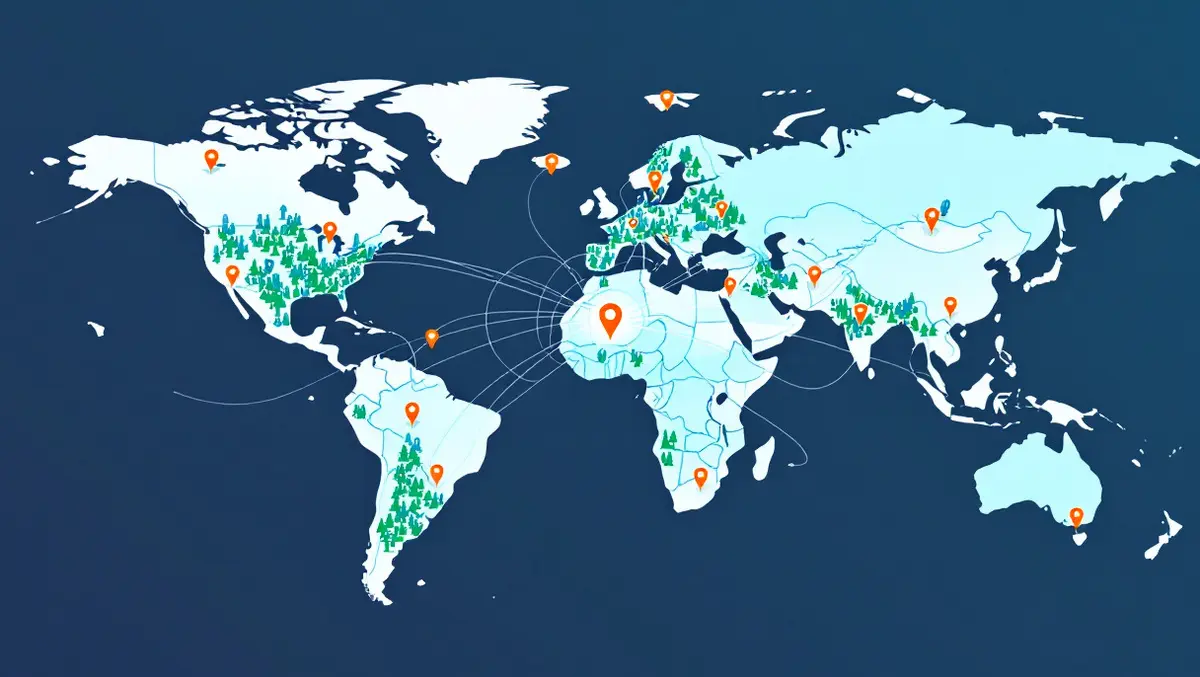
NEC has released the third edition of its Taskforce on Nature-related Financial Disclosures (TNFD) report, which advances the analysis of natural capital risks and opportunities using artificial intelligence, allowing for local risk analysis at around 2,000 locations.
The company has enhanced its site analysis by integrating the expertise of its personnel into generative AI and agentic AI systems. This has enabled NEC to evaluate local risks related to water infrastructure at each analysis site, a type of risk that has traditionally been challenging to assess with more generic analytical tools.
Using these technologies, NEC expanded the number of sites subject to detailed scrutiny to approximately 2,000 and has been able to generate communication materials automatically for stakeholder engagement at the local level. The report also outlines NEC's plans to deepen its collaboration with partners further upstream in its value chain over time.
Enhanced AI-powered analysis
Traditionally, risk assessments at local sites have required a significant investment of time, estimated at roughly 40 hours per site. With the implementation of agentic AI, NEC has been able to conduct simultaneous assessments at multiple sites within about one hour. This shift is expected to deliver efficiency gains equivalent to around 80,000 hours compared to previous methods when measuring local risks across all sites analysed in this edition of the report.
The TNFD report's latest edition also incorporates insights from NEC's contributions to international initiatives. The company has played a role in the drafting of sector-specific guidance for the IT industry in partnership with the World Economic Forum and is involved with the TNFD Nature Data Public Facility, reflecting broader efforts to harmonise sustainability disclosure schemes on a global scale.
Insights that NEC has obtained through these collaborations and through internal application of these technologies are documented in the new report. The report is designed not only for disclosure purposes but as a tool for minimising risks and maximising opportunities related to natural capital.
Expanded scope and local engagement
The third TNFD report includes in-depth, quantitative analysis of both water scarcity and risks relating to floods and storms at NEC Group's sites and within its upstream value chain. This work has been undertaken in collaboration with specialist institutions and with the assistance of generative and agentic AI to enable more localised risk assessments.
NEC has employed what it describes as a "Landscape Approach", visiting sites in areas identified as requiring particular attention and engaging with local stakeholders. The report details a systematic analysis of how potential future natural scenarios could impact business operations by using generative AI.
The investigation goes beyond NEC's operations, organising the hierarchy of its upstream supply chain segments-including mining, material manufacturing, and component manufacturing-and outlining strategies for further research into these risks.
Opportunity framework
As part of what the company refers to as its "client zero" approach, NEC has integrated generative and agentic AI services into its consulting offerings, allowing visualisation of environmental information within enterprise IT systems. The report introduces five themes designed to generate value by addressing environmental challenges through partnerships with other sectors, leveraging NEC technologies such as trust technologies and material informatics.
NEC states, "Insights gained from these experiences are woven into this report. Furthermore, this TNFD report leverages generative AI and agentic AI. Treating NEC itself as 'client zero,' the company first thoroughly utilizes advanced technologies internally, then applies the resulting know-how and insights to help solve customer challenges. This is used not merely for disclosure purposes, but as a tool for minimizing risks and maximizing opportunities."
NEC will take the lead in tackling various challenges to realize data-driven nature-related management. Through its own practical experience, the company will contribute to customers and society by sharing insights gained through consulting and other services.
The company has also announced that it will integrate a more comprehensive assessment of supply chain risks within its next mid-term environmental strategy, named the Eco Action Plan, with implementation starting in 2026. Additionally, insights from the company's development of generative AI are to be used in its sustainability reporting and to address external disclosure requests.