

Makassar hosts cyber resilience drive for executives
Mon, 29th Jun 2026
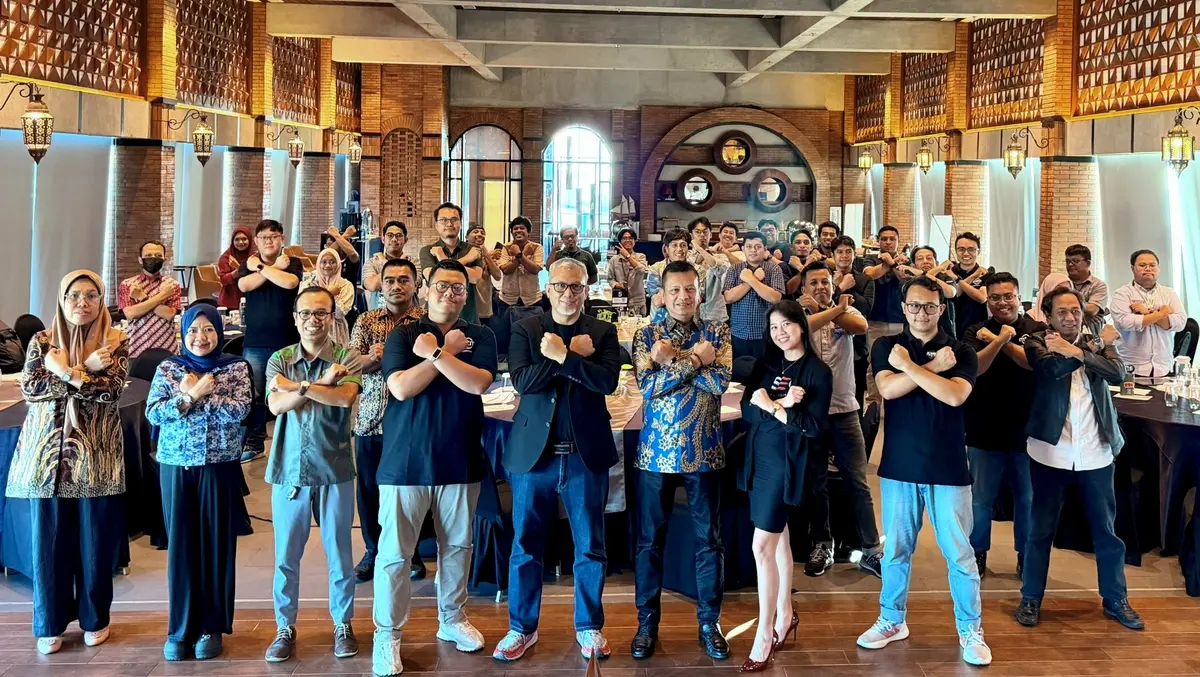
ITSEC Asia and the Indonesian Digitalization and Cybersecurity Association have brought the National Cyber Resilience Movement to Makassar, where the programme drew about 100 business and cybersecurity participants from South Sulawesi.
The event focused on executive tabletop simulations designed to give senior decision-makers practical experience in handling cyber incidents. It forms part of a year-long national initiative to improve cyber awareness and crisis readiness across government bodies, state-owned companies, and private sector organisations.
Cyber preparedness has gained prominence in Indonesia as suspicious digital activity rises. Figures from the National Cyber and Crypto Agency, or BSSN, show that more than 5.16 billion anomalous traffic events and indicators of suspicious cyber activity were recorded across 2025.
That has pushed incident response higher up the corporate agenda, particularly for companies outside the main business centres of western Indonesia. Makassar, one of eastern Indonesia's main commercial hubs, was selected as the latest stop on the roadshow after an earlier session in Banten.
Simulation focus
Rather than relying on lectures, organisers divided participants into groups and guided them through five stages of simulation: understanding the threat landscape, developing mitigation strategies, managing a crisis scenario, presenting key decisions, and conducting a collective review.
The exercise was designed for executives as well as technical specialists, reflecting a broader shift toward treating cyber risk as a management issue. Participants were also given practical tools to take back to their organisations, including a risk matrix, a framework for securing data flows and authentication boundaries, and an assessment model for incident response skills.
Patrick Dannacher, President Director of ITSEC Asia, said the effects of cyber incidents extend well beyond IT departments.
"When a cyber incident occurs, the consequences can affect business operations, customer services, and ultimately an organization's reputation. Cyber crisis readiness cannot rest solely with IT teams. Decision-makers themselves need to understand how to respond quickly and effectively when such situations arise," Dannacher said.
He said the initiative was meant to deliver practical outcomes, not just broad discussion.
"We want participants to leave with something they can immediately put into practice. That is why GNKS goes beyond discussing threats. It helps organizations map risks, develop security architectures, and strengthen decision-making capabilities during cyber incidents. The objective is straightforward: to help organizations become better prepared," he said.
National concern
BSSN's involvement highlights how cyber resilience is increasingly being framed as both a national economic concern and a technical one. Rapid digital adoption across Indonesian industries has increased the exposure of businesses and public institutions to operational disruption, data theft, and reputational damage.
Slamet Aji Pamungkas, Deputy for Economic Cybersecurity and Cryptography at BSSN, said stronger cyber capacity was necessary to support that growth.
"As digital technologies become increasingly embedded across industries, organizations must continuously improve their ability to manage cyber risks. This requires collaboration from all stakeholders to ensure that Indonesia's digital ecosystem can continue to grow in a secure, trusted, and sustainable manner," Pamungkas said.
ADIGSI said one of the main challenges is moving organisations from basic awareness of cyber threats to practical action. That includes giving executives a clearer view of how decisions are made under pressure when systems, customer services, or internal communications are compromised.
"Many organizations already recognize the importance of cybersecurity. The challenge now is translating that awareness into concrete actions. Through GNKS, we aim to create a practical platform where participants can learn from one another and bring back insights that can be directly applied within their organizations," said Firlie Ganinduto, Chairman of ADIGSI.
The National Cyber Resilience Movement was launched earlier this year and is intended to reach more than 1,000 participants across Indonesia. The Makassar session shows how organisers are extending executive cyber training beyond Jakarta and other major western markets as regional businesses become more digitally connected and, with that, more exposed to cyber crises.
Participants in Makassar worked through scenarios intended to mirror the pressure and uncertainty of a live incident, with the programme ending in group reviews of the key decisions made during the exercise.