

KAIST & partners unite to advance AI-driven 4D radar for cars
Mon, 4th Aug 2025
bitsensing, the AVE Lab at the Korea Advanced Institute of Science and Technology (KAIST), and ZETA Mobility have signed a memorandum of understanding to collaborate on the development and commercialisation of AI-driven 4D imaging radar technology for the automotive industry.
Partnership objectives
The agreement brings together the radar hardware platform expertise of bitsensing, radar signal processing and sensor fusion AI algorithms from KAIST's AVE Lab, and ZETA Mobility's large-scale automotive datasets and embedded AI knowledge. This collaboration is structured to facilitate research and development, with the goal of accelerating the commercial application of AI-powered 4D imaging radar systems in support of autonomous vehicles and advanced driver assistance systems.
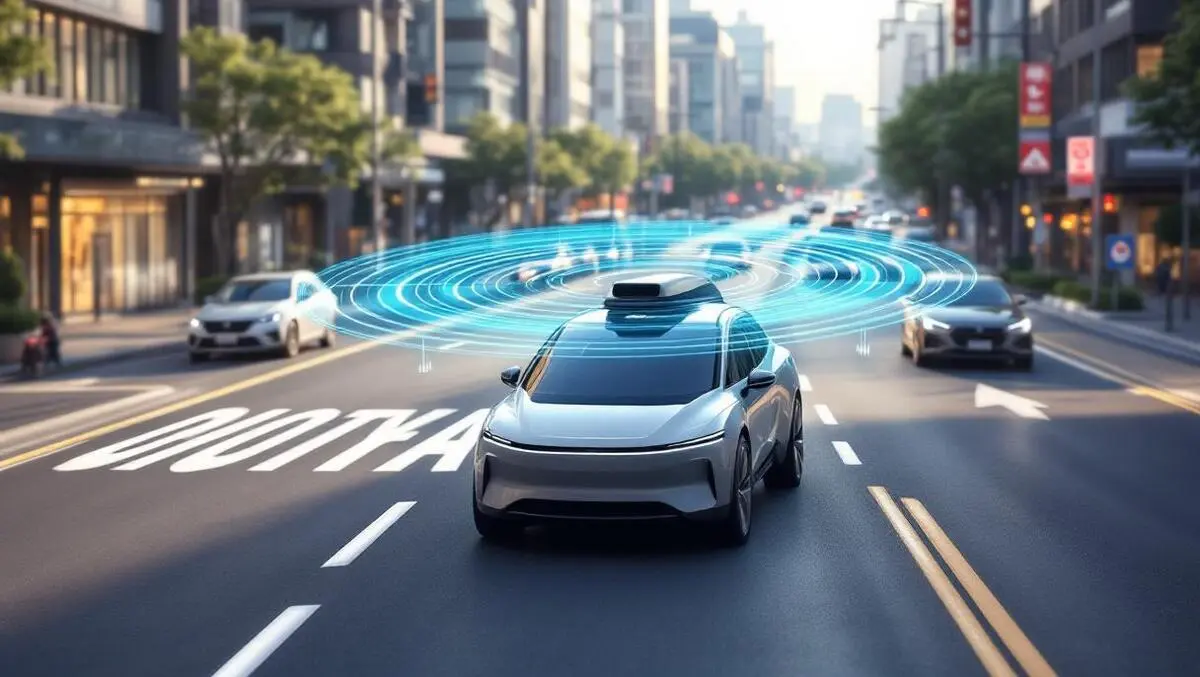
The 4D imaging radar technology at the centre of this partnership differs from conventional radar systems by capturing not only distance, velocity, and direction, but also elevation. This additional dimension, the Z-axis, improves the detection and classification accuracy of objects such as vehicles, pedestrians, and infrastructure, even in challenging weather conditions. As a result, the technology is considered a key enabler of safer and more reliable autonomous driving under varied environmental scenarios.
Technical collaboration
Through this partnership, bitsensing will supply its proprietary 4D imaging radar platform. The AVE Lab at KAIST will advance the development of AI-based algorithms, leveraging expertise in sensor fusion and radar signal processing. ZETA Mobility will provide automotive datasets on a large scale, as well as its proficiency in embedded AI systems. The objective is to jointly initiate research and development, performance validation, field testing, and technical enhancements that will support the real-world deployment of 4D imaging radar in automotive applications.
Commenting on the partnership, Jae-Eun Lee, Chief Executive Officer of bitsensing, said:
"4D imaging radar is a key sensor for autonomous driving that demands both high precision and all-weather reliability. By combining bitsensing's proprietary radar expertise with the AI and dataset capabilities of KAIST AVE Lab and ZETA Mobility, we are taking a major step forward in bringing next-generation radar solutions to market."
Professor Seung-Hyun Kong of the AVE Lab at the Cho Chun Shik Graduate School of Mobility at KAIST commented on the significance of the agreement. He stated, "This agreement is particularly significant as it represents collaboration among institutions that possess core technologies essential for developing artificial intelligence for 4D radar."
Kong also said, "Bitsensing, specialising in high-performance 4D radar hardware; ZETA Mobility, developing embedded AI-based data processing and system integration modules; and KAIST AVE Lab, a leading group in AI research for surrounding object recognition using 4D radar, will combine their unique expertise. Through this partnership, we aim to lead the world in developing and commercialising advanced AI-embedded 4D radar systems."
Hyunseok Lee, Chief Executive Officer of ZETA Mobility, commented, "This partnership, through which specialised institutions collaborate to solve technological challenges and develop world-class solutions, is extremely meaningful. ZETA Mobility will leverage our embedded AI expertise to contribute significantly to advancing and commercialising autonomous driving technologies."
Industry context
The three-way agreement outlines a process involving phased collaboration, which includes joint research, validation of performance in both laboratory and field settings, and the ongoing technical evolution of the radar system. The partners intend that these steps will lay the groundwork for the broader adoption of AI-based 4D imaging radar across the automotive sector, supporting greater vehicle autonomy and the advancement of driver assistance systems.