

Fujitsu launches AI tool to modernise legacy COBOL
Fri, 10th Apr 2026.webp)
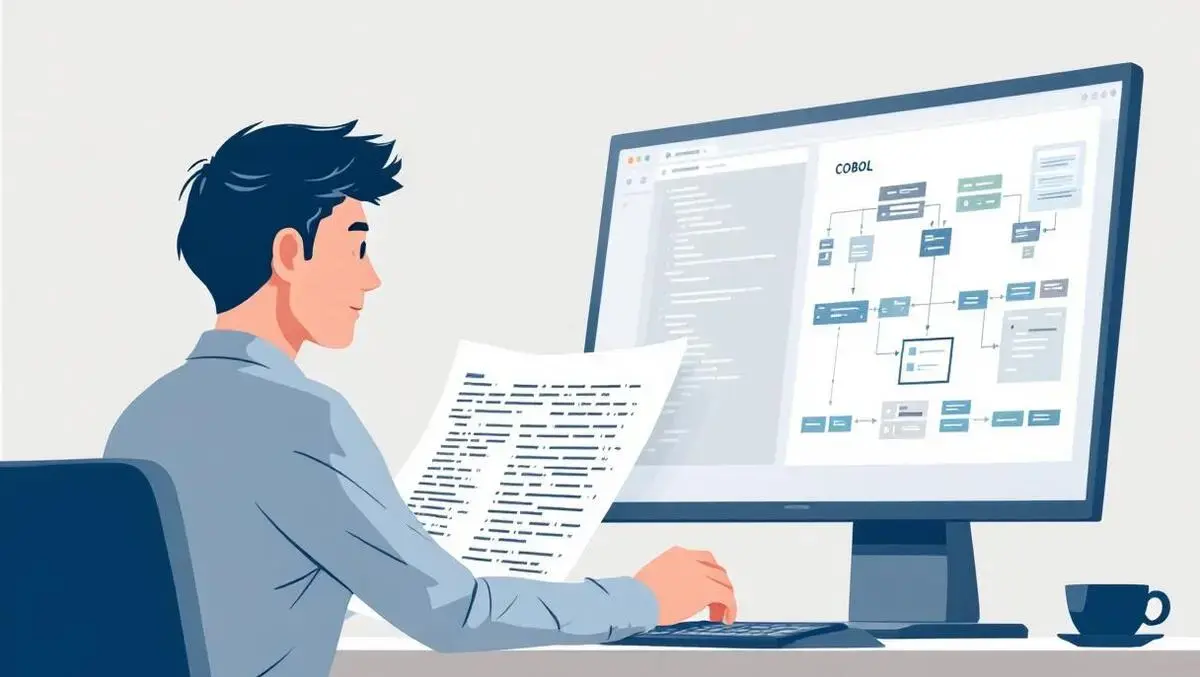
Fujitsu has launched Fujitsu Application Transform, a generative AI service that analyses source code and produces design documents. The product is aimed at legacy systems, including COBOL.
The launch addresses a persistent problem for large organisations that still rely on older core software but lack up-to-date documentation on how those systems work. In many cases, modernisation projects slow because teams must first interpret decades-old code and reconstruct design records by hand.
The service uses Fujitsu's Kozuchi platform and draws on the company's system development expertise to analyse source code in existing systems. It is designed to review COBOL and other legacy code bases, then generate design documents that describe those systems.
In internal trials, Fujitsu reported a 97% reduction in the time needed to create design documents. It also reported improvements of 95% in comprehensiveness and 60% in readability compared with conventional methods.
Legacy burden
Legacy applications remain a major issue for banks, insurers, manufacturers and public bodies, many of which still run core operations on software written decades ago. COBOL in particular is still widely used in back-office and transaction-heavy environments, even as organisations try to move services to newer platforms and integrate them with cloud-based tools.
One of the main obstacles is that old systems are often poorly documented, especially after years of updates by different teams. That leaves current engineers with limited visibility into dependencies, business logic and operating processes, making migration work costly and risky.
The new product builds on a software analysis and visualisation service introduced earlier. It standardises code analysis and document generation methods and applies what Fujitsu describes as a Knowledge Graph-Enhanced RAG approach for software engineering.
According to Fujitsu, the method links large volumes of source code and remaining design information to reduce omissions and hallucinations in AI-generated output. General-purpose generative AI models can struggle with complex enterprise code, inferring missing logic incorrectly or producing incomplete summaries when handling large, interdependent code bases.
Fujitsu says its system is designed to address that problem by grounding generation in analysed code relationships rather than relying only on broad language model prediction. That is intended to produce more consistent design information from existing source code, including complex COBOL environments.
Finance use
Fujitsu says the service is already being used by SMBC Nikko Securities in work to modernise its core systems. Financial institutions are among the heaviest users of long-running legacy applications, where any change to transaction systems must be handled carefully because of operational and regulatory demands.
The Japanese group has been working with Fujitsu on reverse-engineering design documentation for legacy languages, including COBOL. That places the new service in a sector where the commercial case for faster, more reliable system understanding is especially strong.
"We see this announcement as an initiative that realistically advances the modernisation of our legacy systems by combining Fujitsu's deep system development expertise built up over many years with generative AI. From fiscal year 2025, we have been conducting joint verification with Fujitsu on reverse-engineering design documentation for legacy languages, including COBOL, and through this collaboration, we have come to recognise the significant potential of this technology. Going forward, we hope to continue working closely with Fujitsu to achieve more practical and effective modernisation," said Toshihiro Horiuchi, Managing Executive Officer, SMBC Nikko Securities.
Wider push
The product also reflects a broader effort by technology suppliers to apply generative AI to software maintenance rather than just new code creation. While much of the market focus has centred on coding assistants for developers, a growing share of investment is moving towards tools that can interpret, document and reshape older systems that remain central to large organisations.
The market could be significant in Japan, where many companies still depend on long-established business systems and face pressure from ageing workforces and shortages of specialist engineers familiar with older programming languages. Services that reduce the need for scarce legacy expertise may therefore attract interest beyond the financial sector.
Fujitsu will offer the service as software as a service in Japan. The company says it is intended to help customers gain a clearer understanding of current system specifications and characteristics by generating design documents from source code.