

Fujitsu & Acer Medical to trial aiGait for early disease risk
Thu, 24th Jul 2025
Fujitsu and Acer Medical have announced a collaboration to trial a new artificial intelligence (AI) service, named "aiGait", designed to assess disease risk in elderly patients by detecting abnormalities in their walking patterns.
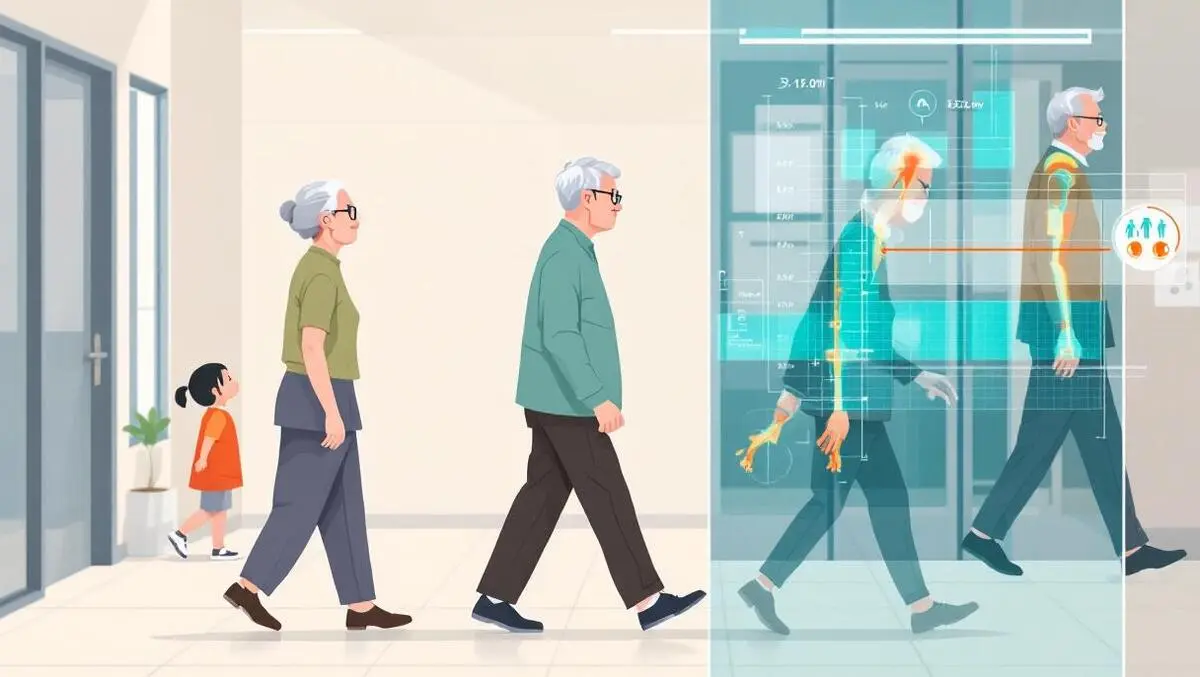
The "aiGait" system uses computer vision AI to analyse subtle changes in the way a person walks, sits, and stands, with the aim of providing early warnings for conditions such as dementia and Parkinson's disease. The technology, still in its conceptual phase, is currently being tested at the daycare centre attached to Taipei Veterans Hospital in Taiwan. Acer Medical plans to introduce the solution to elderly care facilities across Taiwan by the end of 2025.
Clinical insights
The collaboration brings together Fujitsu's skeleton recognition AI and Acer Medical's expertise in AI-powered medical imaging to transform routine physical movements into clinically useful data. The AI works by comparing recorded movements of patients with those characteristic of progressive neurological diseases. Where anomalies are detected, healthcare professionals receive actionable reports which can support medical assessment and decision-making.
Caregivers and nurses at participating facilities in Taiwan use smartphones and tablets to record videos of patients performing simple activities. These are assessed by "aiGait", with reports provided to caregivers and nurses in accessible formats. When the system recognises deviations from expected movement patterns, it prompts care staff to recommend further assessment by medical professionals, facilitating earlier diagnosis and intervention.
Development and deployment
Fujitsu's skeleton recognition AI technology, the basis for "aiGait", was originally developed for gymnastics judging, incorporating correction algorithms to reduce estimation errors in posture recognition. This technology leverages photorealistic data generation and automation, which shortens the development and learning period for AI models from months to hours. The resulting solution can analyse videos taken on consumer devices such as smartphones or tablets, making it practical for use in care facilities.
According to the companies, this approach is intended to address the increasing risk of chronic disease that comes with an ageing population and the need for faster, more accessible early detection methods. Research cited from the National Health Research Institutes in Taiwan indicates that the number of people aged 65 and over living with dementia in Taiwan was approximately 350,000 in 2024, with projections suggesting a rise to about 680,000 by 2041.
Industry response
"This collaboration brings together the technological and clinical expertise of both Taiwan and Japan, addressing the growing demand for preventive medicine and smart healthcare in aging societies. Acer Medical will continue to refine the user experience by actively gathering feedback from healthcare professionals and care providers, aiming to enhance the practicality and scalability of the overall solution," said Allen Lien M.D., DrPH, Chairman of Acer Medical.
Hidenori Fujiwara, Head of Human Digital Twin Division, Global Solution Business Group, Fujitsu, said: "We are honored that Fujitsu's skeleton recognition AI technology can contribute to the early detection of dementia and Parkinson's disease through our collaboration with Acer Medical. By combining Acer Medical's outstanding expertise and track record in the AI health tech field with our technology and know-how in analyzing human movement with ease and high accuracy, we have created a solution that can be rolled out globally. This initiative aligns with the World Health Organisation's vision of 'healthy aging' and we aim to leverage the insights gained from its implementation in Taiwan to contribute to addressing the challenges faced by an aging world."
The companies intend to deploy the technology further within care facilities and primary care clinics in Taiwan, with potential future applications in sports science analysis, paediatric neurodevelopmental disorders, and cerebral palsy.
Broader context
Under the Fujitsu Uvance business model, Fujitsu is creating a network of partners to leverage AI in resolving social issues and supporting health management services. The collaboration with Acer Medical forms part of this wider commitment, seeking practical solutions that empower early and proactive healthcare in ageing societies.
The trial of "aiGait" will include the integration of feedback from healthcare professionals to refine the application's usability further, ensuring that detected abnormalities in gait can be systematically assessed and quantified for clinical judgement. This process is expected to promote the adoption of AI-driven, preventative healthcare tools in wider clinical settings.