

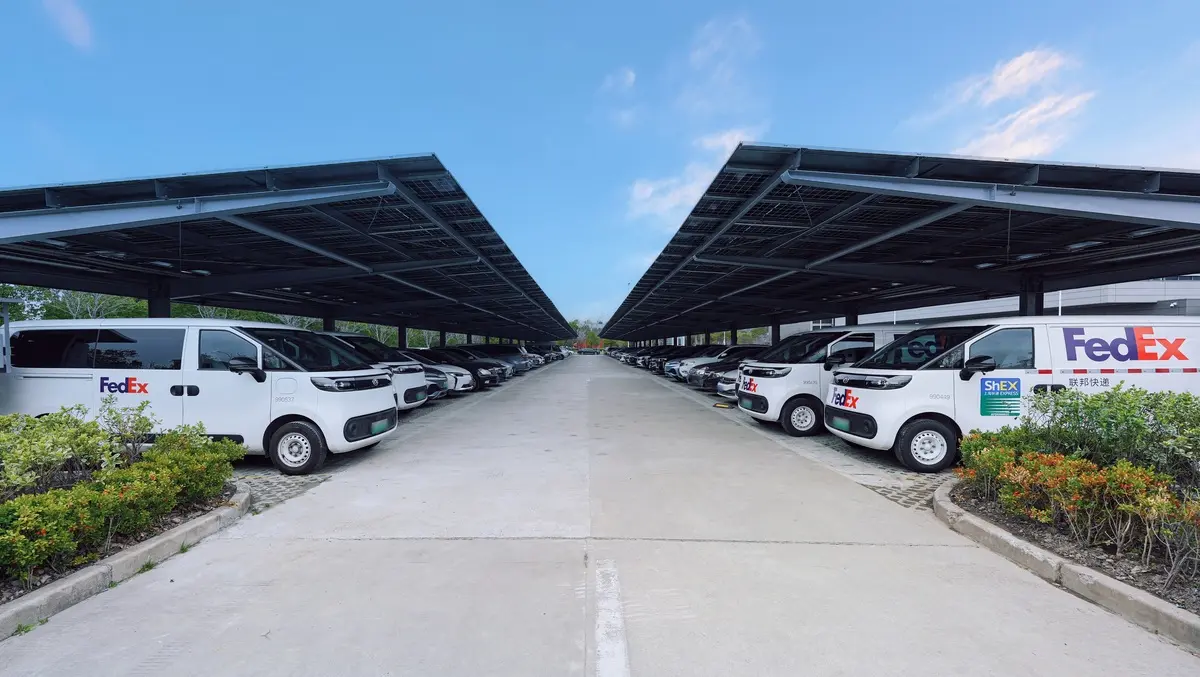
FedEx opens first on-site solar hub at Shanghai airport
Thu, 26th Mar 2026
FedEx has opened an on-site solar installation at its Shanghai International Express and Cargo Hub, becoming the first logistics operator in the cargo area at Shanghai Pudong International Airport to generate solar power on site.
The system spans more than 4,000 square metres across existing parking facilities at the hub. FedEx expects it to generate about 743,000 kWh of electricity a year, with most of the output used for office operations.
Compared with equivalent coal-fired electricity generation, the installation is expected to avoid nearly 417 metric tons of carbon emissions annually. It is also projected to reduce particulate matter by about 2.1 tons and sulfur dioxide by 4.21 tons each year.
Regional rollout
The Shanghai project is part of a broader effort to increase renewable energy use across FedEx's Asia Pacific network.
At its Incheon Gateway in South Korea, FedEx has operated 2,400 rooftop solar panels since late 2022. The system supplies about 19% of the facility's monthly energy needs, while full LED lighting saves more than 22,000 kWh a year.
In China, a rooftop solar array at the FedEx North China Regional Headquarters in Beijing began operating in 2023. In Singapore, on-site solar generation has supplied more than half of the electricity used at the South Pacific Regional Hub since early 2025, and also supports the company's local electric vehicle fleet.
The Shanghai installation comes as logistics groups face growing pressure from customers, regulators and investors to cut emissions from warehouses, ground fleets and air operations. While aviation remains difficult to decarbonise, companies have focused on site energy use, vehicle electrification and route efficiency as nearer-term measures.
Across more than 30 locations worldwide, FedEx says it has generated more than 31 GWh of on-site and off-site solar energy. The company has set a target of carbon-neutral operations globally by 2040.
Alongside renewable electricity projects, FedEx is expanding its use of electric delivery vehicles in Asia Pacific. Its global electric vehicle fleet now exceeds 8,000 vehicles, with electrification in China surpassing 25% and further deployment under way in Japan, South Korea, New Zealand and Thailand.
Recent additions in South Korea include six electric cargo vans operating on dense routes in Seoul and Busan. New electric vehicles have also entered service in Singapore.
Digital tools
FedEx is also using digital systems designed to help customers manage shipments with lower environmental impact. These include shipment management and customs declaration tools, as well as FedEx Sustainability Insights, which provides emissions-related information linked to shipping activity.
The company is also deploying artificial intelligence, autonomous systems and Internet of Things technology across its network, including sorting robots and automated guided forklifts in logistics operations.
Salil Chari, President of FedEx Asia Pacific, linked the investment to the region's trade growth and the company's operating model.
"Asia Pacific is one of the world's most dynamic trade corridors, and the future of its growth depends on a more resilient and sustainable logistics backbone," said Chari.
"We are investing in infrastructure that accelerates decarbonization at scale. The Shanghai solar installation is another example of how we are embedding clean energy directly into our operations, building an efficient, future-ready network that serves our customers while advancing environmental progress across the region," added Chari.
FedEx also highlighted environmental work outside its transport operations through its FedEx Cares community programme. In fiscal year 2025, employee participation in community projects rose 20% from a year earlier, while sustainability-focused programmes increased by 14%.
Through those efforts, employees have planted 3,465 trees and native plants, including work linked to mangrove restoration and riverbank clean-ups.