

DayOne launches Thailand AI career expo with 800 attendees
Mon, 27th Apr 2026
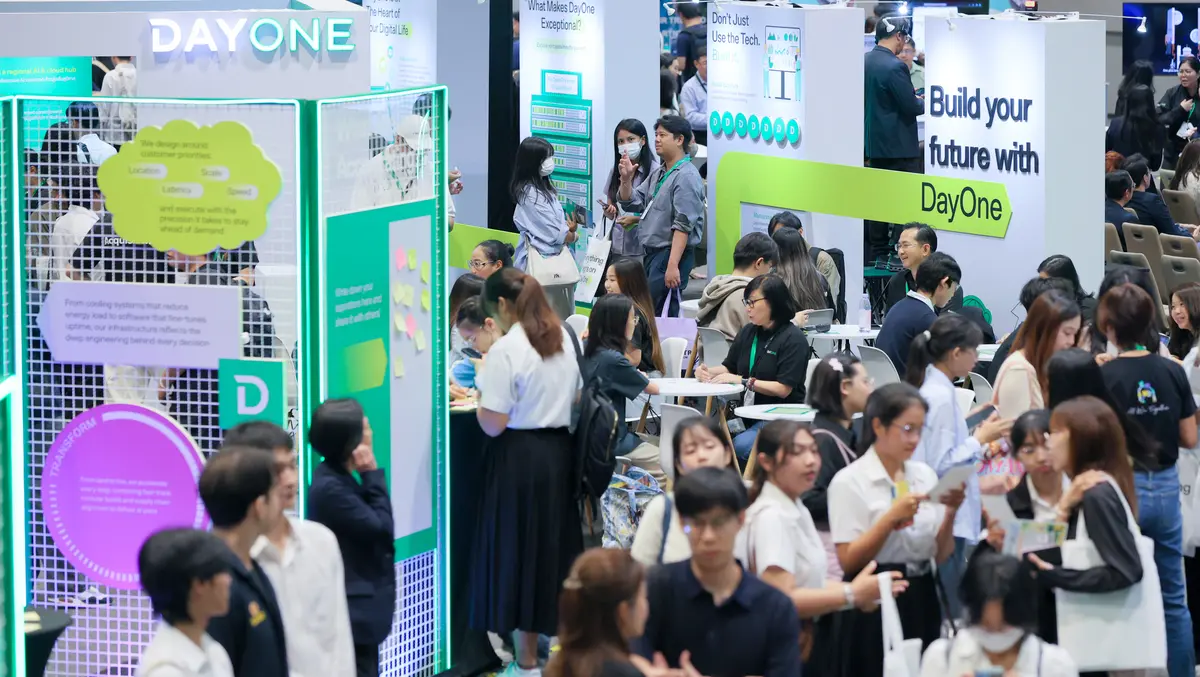
DayOne has launched its first Tech & AI Career Expo in Thailand, drawing more than 800 participants in Bangkok.
The one-day event brought together government agencies, industry groups, universities and job seekers, with more than 30 exhibitors offering access to over 600 roles in technology and AI.
The launch comes as DayOne expands in Thailand through a large data centre development in Chonburi. The Singapore-headquartered operator is building what it describes as the country's first 1GW digital infrastructure platform after entering the market with a $1 billion investment commitment.
Its Chonburi Tech Park Data Centre Campus broke ground last year as part of a multi-phase rollout. More than 100MW of IT capacity is expected to go live this year, with renewable energy integration due to begin next year through work with Amata B.Grimm Renewable Energy Company and the Provincial Electricity Authority.
Talent Focus
The careers event shows how DayOne is linking its infrastructure expansion with recruitment and training in Thailand. Alongside employer booths and hiring activity, the expo included data centre modules explaining the infrastructure behind cloud and AI systems, as well as university demonstrations on robotics, computer vision and digital learning platforms.
DayOne also used the event to introduce internship and graduate programmes in Thailand. The schemes are designed to give students and early-career workers practical experience and a pathway into jobs tied to the country's growing digital infrastructure sector.
Jamie Khoo, chief executive officer of DayOne, framed the company's approach around workforce development as well as construction.
"As we move from one wave of technology to another, from traditional systems to cloud and now AI, what remains constant is the need for people with the right skills and mindset to build the economy of the future. Thailand is an important part of our regional journey, and we see strong opportunities to develop not only infrastructure, but also the talent and capabilities that will support the next phase of digital growth," Khoo said.
She also addressed concerns that AI may displace workers. "Every wave of technology brings change, but it also creates new opportunities. AI is no different. The key is to continue learning, adapt, and embrace the changes ahead," she said.
Policy Support
Thai public sector bodies involved in investment, electricity and industrial development attended the event, including the Board of Investment of Thailand, the Eastern Economic Corridor Office, the Electricity Generating Authority of Thailand, the Industrial Estate Authority of Thailand and the Provincial Electricity Authority. AMATA also took part as a strategic partner.
The lineup reflects how large-scale data centre projects in Thailand depend on coordination across land, power, industrial planning and investment policy. It also shows how AI-related infrastructure is becoming increasingly tied to broader economic planning.
Narit Therdsteerasukdi, secretary general of the Board of Investment of Thailand, linked the event to the wider economic effects of digital infrastructure spending.
"This event demonstrates what the digital economy looks like in practice - not just investment, but jobs, skills, and opportunities for Thai people. Data center development is driving a structural transformation of Thailand's economy, creating value across construction, engineering, renewable energy, and operations, while strengthening local supply chains and long-term talent development," Therdsteerasukdi said.
Energy Demands
As AI workloads increase demand for data processing, energy supply and efficiency have become central issues for operators and governments. The event also highlighted that challenge, with speakers pointing to the need for changes in how electricity is generated, managed and integrated with renewable sources.
Warit Rattanachuen, deputy governor of the Electricity Generating Authority of Thailand, said the growth of data centres is creating demand far beyond server halls.
"As digital infrastructure scales, energy systems must evolve alongside it. Data centers require new approaches to energy efficiency, renewable integration, water management, and system optimization, creating opportunities not only in technology, but across the broader ecosystem, including engineering, materials, and financial innovation," Rattanachuen said.
DayOne operates across several markets in Asia and Europe, including Singapore, Malaysia, Indonesia, Thailand, Japan, Hong Kong and Finland. Its expansion in Thailand adds to regional competition for data centre investment as governments seek to position themselves as bases for AI computing, cloud services and related industrial supply chains.
The Bangkok expo is the first in a regional series aimed at building links between infrastructure projects, employers and education providers. More than 600 roles were presented to attendees at the inaugural event.