

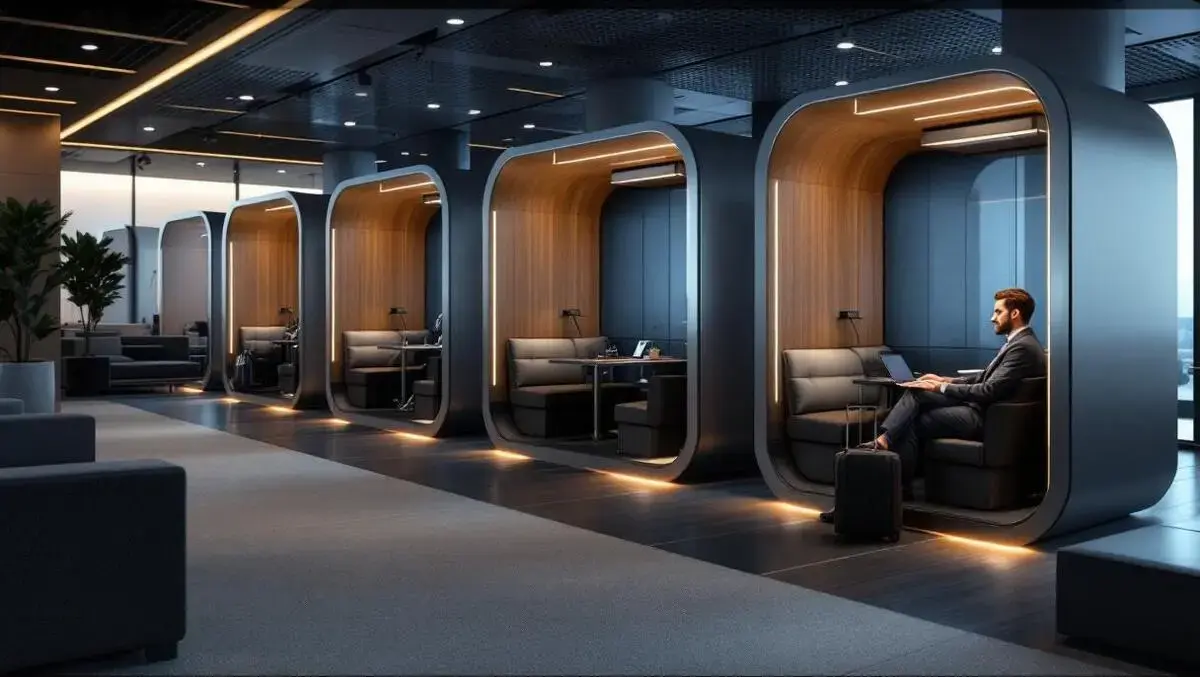
Bureau teams with WeWork on airport workspace pods
Tue, 21st Apr 2026
Bureau has partnered with WeWork to build WeWork Go, a line of private workspace pods for airports, convention centres and other public venues worldwide.
Under the arrangement, Bureau will serve as the manufacturing and materials partner for the new offering. The pods are designed for people who need a private place to work while travelling or moving between meetings and events.
WeWork Go will be available in three Bureau-built formats: a single-user pod for individual work, a multi-user pod for up to four people, and an ADA-compliant unit to support accessibility.
According to the companies, the pods are soundproof and bookable. Bureau said the design features architectural-grade framing, soundproofing, lighting, ergonomic seating and what it described as eco-friendly materials.
The launch reflects a broader push by workspace providers to bring office-style environments beyond traditional leased offices. Demand for quiet spaces in airports, hotels and event venues has grown as hybrid working has become more established and business travel has resumed.
Founded in 2019, Bureau specialises in modular soundproof workspaces and says it operates across six regions. It says it has completed more than 2,500 installations for organisations including Google, Amazon, Lego, the NHS, Deloitte and NASA.
The partnership gives Bureau a role in a product linked to one of the best-known brands in flexible office space. WeWork described the pods as part of a wider ecosystem of memberships and products.
Bureau also highlighted a recent certification milestone. In March, it said it became the first soundproof booth company to receive the Works with WELL trademark licence from the International WELL Building Institute, which recognises standards for air quality, chemical safety, and VOC emissions under the WELL Building Standard.
The product is based on the idea that work increasingly happens between fixed locations rather than in a single office. That shift has led operators, landlords and venue owners to test smaller work areas that can be installed in transport hubs and public buildings without the cost and disruption of full office fit-outs.
"The old assumption about workspaces was that work happens in one place, at one desk, in one building. WeWork has understood this before most: this just isn't how people work anymore. Work happens in the gaps. In the loud places. On the move. WeWork Go is designed to meet people in those moments and give them a genuinely excellent solution. That's the same challenge Bureau takes on every day. We believe the workspace around you shapes what you're capable of, and that belief doesn't stop at the office door," said Morgan, Co-founder, Bureau.
WeWork Go is intended for locations where privacy and concentration are often hard to find, including airport terminals, hotel lobbies and large convention venues. In those settings, workers may need to make calls, hold short meetings or complete focused tasks between journeys and appointments.
For Bureau, the agreement extends a strategy centred on modular workplace design rather than standard off-the-shelf booths. The company says it works with partners to tailor products to specific use cases and locations, a model it has used as employers and venue operators look for more flexible ways to add private space.
Meanwhile, WeWork has been reshaping its business after a turbulent period for the flexible office sector. Expanding into smaller-format products for public and transit locations suggests an effort to reach customers beyond conventional co-working floors and private offices.
The initial rollout is being presented ahead of a wider global launch, with the first installations positioned as part of a network rather than as standalone units. The aim is to provide access to private workspaces in places where office infrastructure is typically limited or absent.