

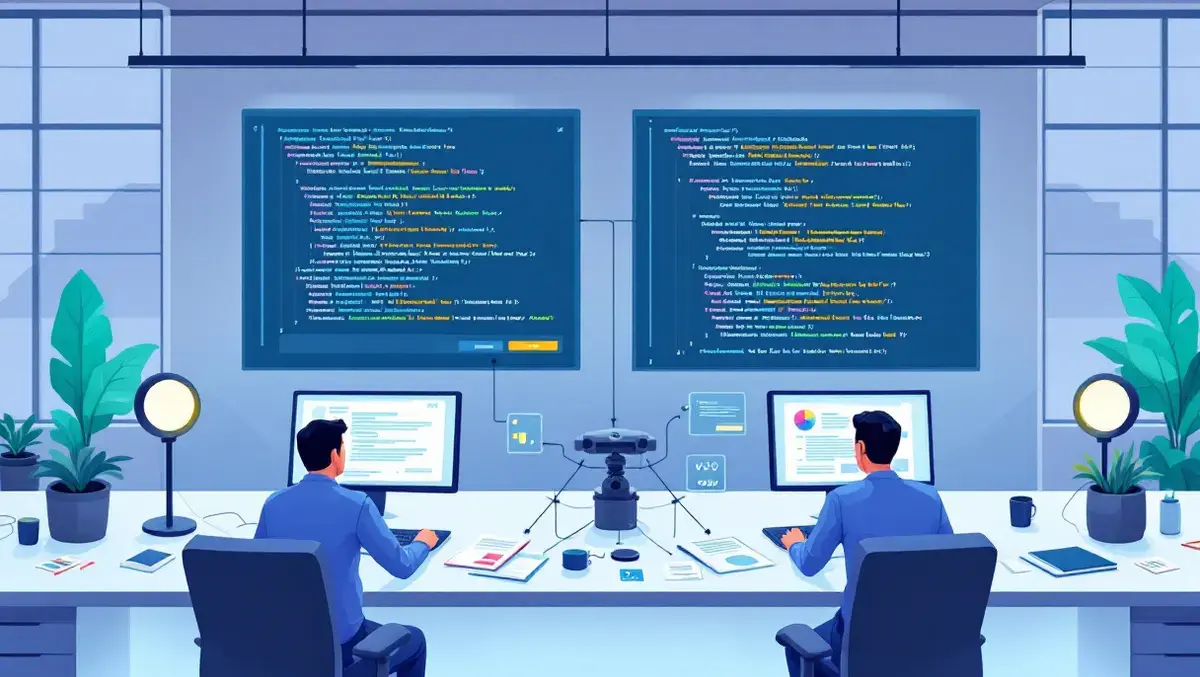
Anthropic launches dynamic workflows in Claude Code
Fri, 29th May 2026
Anthropic has launched dynamic workflows in Claude Code, now in research preview across Claude Code products and several cloud AI platforms.
The feature lets Claude break a task into multiple subtasks and run them through tens to hundreds of parallel subagents within a single session. The system checks results before presenting a final answer.
Dynamic workflows are available in the Claude Code command-line interface, desktop application, and Visual Studio Code extension for users on Max, Team, and some Enterprise plans. Anthropic is also making the feature available through the Claude API and on Amazon Bedrock, Vertex AI, and Microsoft Foundry.
Access varies by customer tier. For Max and Team users, and for those using Claude Code through the API, the setting is on by default. Enterprise customers need an administrator to enable it.
The rollout is aimed at software engineering work that is difficult to complete in a single pass, including codebase-wide bug investigations, security reviews, large migrations, and other jobs that may touch hundreds or thousands of files.
How it works
When a workflow starts, Claude creates a plan from the user prompt and divides the job into smaller pieces. It then assigns those tasks to parallel agents, while separate agents check or challenge the findings before the results are combined.
According to Anthropic, the process is designed for long-running work that can continue for hours or days. Progress is saved during the run, allowing interrupted jobs to resume rather than restart.
Anthropic is also adding a Claude Code setting called ultracode, available through the effort menu. This sets the effort level to xhigh and allows Claude to decide automatically when to use a workflow.
Users can also ask the system directly to create a workflow. Anthropic recommends starting with a limited task, noting that dynamic workflows can use substantially more tokens than a standard Claude Code session.
The first time a workflow is triggered, Claude Code shows the user what is about to run and asks for confirmation. Organisation administrators can also disable workflows through managed settings.
Early examples
Anthropic said internal teams and early access users have been testing the system on a range of software development tasks, including profiler-led optimisation reviews, broad security checks across repositories, framework swaps, API deprecation work, and language migrations.
One example involved the Bun JavaScript runtime. Anthropic said Jarred Sumner used dynamic workflows to help port Bun from Zig to Rust, producing about 750,000 lines of Rust code, with 99.8% of the existing test suite passing, and completing the work in 11 days from first commit to merge.
In that project, one workflow identified Rust lifetimes for struct fields in the Zig codebase, while another wrote Rust files as matching ports of the Zig originals. A further loop then drove the build and test process until both ran clean, and a later overnight workflow opened pull requests aimed at reducing unnecessary data copies.
That work has not yet been put into production. Even so, the example points to the kind of large-scale software maintenance and migration work AI developers are increasingly targeting as they try to move beyond coding assistance into more autonomous engineering tasks.
That shift comes with practical constraints. Dynamic workflows require more usage than a normal Claude Code session, which means higher token consumption for users operating under commercial plans or through APIs.
Anthropic framed the feature as a way to tackle tasks that are too large or too complex for a single-agent run, especially in legacy systems where code is spread across large repositories and changes need independent verification. The system can keep iterating until answers converge, rather than relying on a single pass.
The release also reflects broader competition among AI model developers to offer tools that can manage more of the software development cycle, from analysis and planning to implementation and review. Anthropic is placing the feature not only in its own coding products but also across cloud marketplaces run by major technology companies, widening the routes through which customers can use it.
Anthropic said dynamic workflows can handle "critical work you need checked twice" by using independent attempts at a problem and adversarial agents that try to break the result before the user sees it.