Compliance teams could spend less time on manual reporting as NAVEX adds an AI agent designed to surface risk signals inside workflows.
Businesses should treat AI like a new hire, as weak oversight could expose sensitive data and leave staff needing fresh skills to stay relevant.
Its 17,000-store group is broadening AI use from customer service to operations and analytics as it deepens ties with suppliers.
The model could cut retraining costs for factories and warehouses by controlling different robot types with one system, Robbyant said.
A new survey shows Singapore businesses are more prepared than peers to absorb supply shocks, with 23% able to run for up to six months.
Funding will help Gyre Energy prove its cooling software can cut costs at a 140,000 sq ft cold chain site run by a global operator.
Enterprises risk slower returns from AI as manual approvals and release bottlenecks keep software lead times stuck at 30 to 45 days.
Short retention windows and heavy sampling could curb AI agents' ability to reason over telemetry as observability shifts beyond human operators.
Security teams could cut alert overload as Google ties exposed assets to live attacker activity, helping prioritise the riskiest flaws first.
Most organisations must upgrade their systems to run agentic AI in production, as cloud costs, governance and energy use climb.
Firms with manually rotated ADFS certificates could still be exposed, as attackers may recover live signing keys and forge SAML logins.
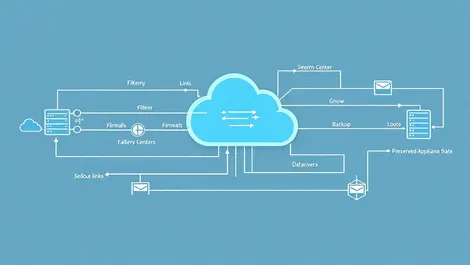
The controls are helping network teams filter routes, steer traffic and preserve appliance state without third-party virtual networking tools.
Enterprises can now buy and register third-party AI agents through Google Cloud Marketplace for use inside Gemini Enterprise.
Demand for production-ready AI agents is pushing Google to reframe Cloud Run as a platform for long-running, data-driven workloads.
The framework aims to help IT leaders control security, governance and costs as agent-based systems move from pilot projects into production.
Financial institutions across Asia Pacific are being shown how AI agents, digital identity and tokenisation could reshape secure payments in coming years.
Users now have more local routing choices as ExpressVPN widens its app-selectable network to 214 locations in 113 countries.
Sensitive physics and engineering research at US and Canadian universities may have been exposed after hackers used Roundcube flaws to enter mail servers.
The two-hour exercise is designed to show whether security teams can recover cleanly as AI-driven attacks can now unfold in minutes.
The appointments signal a sharper partner-led route to market as the software group pushes AI deeper into customer service systems used by thousands.